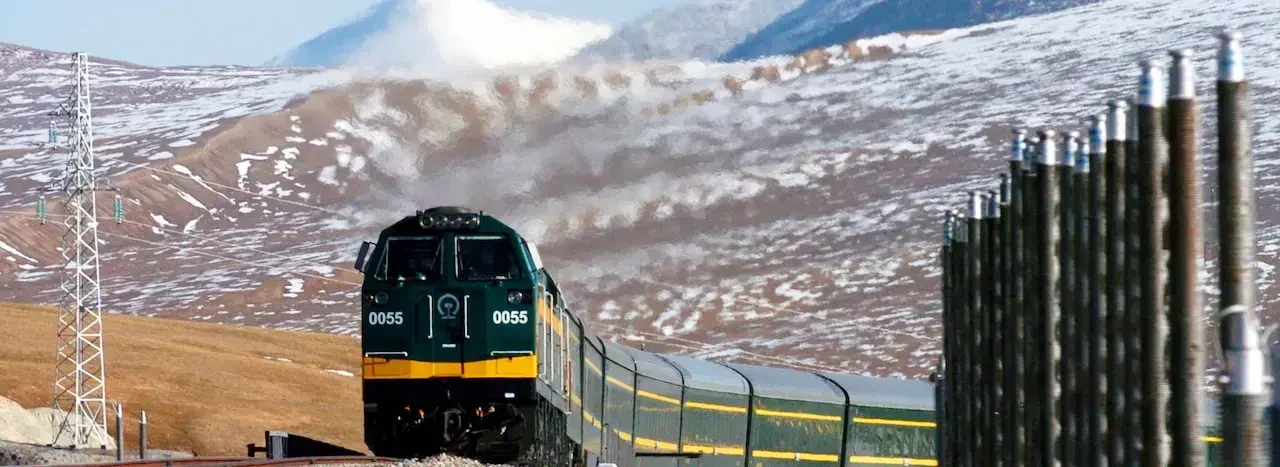
It connects Xining to Lhasa over 1,956 km. Trains feature double-glazed UV windows, diffuse oxygen systems, personal oxygen outlets, and soft sleeper cabins.
Oxygen Systems and High-Altitude Engineering
Air at 5,000 meters altitude contains roughly half the atmospheric oxygen of sea level. To keep passengers safe and comfortable, all trains running on the Golmud–Lhasa plateau section feature specialized Bombardier-designed carriages equipped with dual oxygen delivery systems:
When the train passes Golmud and ascends above 3,000 meters, an automated central system pumps oxygen-enriched air into all passenger carriages, raising effective cabin oxygen concentration to approximately 70–80% of sea level.
Every soft sleeper berth, hard sleeper berth, and seat has an individual oxygen outlet. Disposable oxygen tubes (cannulas) are provided free of charge by train conductors whenever you feel lightheaded.
Carriage windows feature double-glazed, tinted glass that blocks harmful high-altitude ultraviolet rays while preserving crystal-clear photography of snow-capped peaks.
Choosing Your Ticket Class: Soft Sleeper vs Hard Sleeper
Gateway Train Routes to Lhasa
Direct sleeper trains depart daily or every other day from major Chinese hub cities. Check our specific route guides for detailed timetables:
The premier trans-China journey taking ~40 hours across 3,757 km. Read our complete guide to the Beijing to Lhasa train.
Departing every other day, taking ~36 hours from the panda capital. Read our detailed guide to the Chengdu to Lhasa train.
Xining is where the high-altitude section officially begins. Travel time is just 21 hours overnight, making it ideal if you fly into Xining to acclimatize for one day before boarding.
Spanning China from east to west in 46 to 53 hours—epic journeys traversing diverse geographic zones.
Ticketing Realities & Permit Checkpoints
Train tickets are released by China Railway on the 12306 system 14 days prior to departure. Soft sleeper tickets for summer (July–August) and Golden Week sell out within seconds. Because foreign travelers must show a paper Tibet Travel Permit original to collect tickets and board, we book tickets on your behalf and courier your permit to your mainland transit hotel.
Tell us your dates and we will reply with a plan and permit timeline.
Frequently Asked Questions About the Tibet Train
Is there food on the train?
Yes. Every train has a dining car serving freshly cooked Chinese dishes. Trolleys selling box meals, fruit, instant noodles, and hot water dispensers for tea are available at the end of each car.
Will I get altitude sickness on the train?
The train ascends gradually from Golmud (2,800 m) to Tanggula Pass (5,072 m). While mild headaches can occur, the diffuse oxygen system keeps most travelers comfortable. Bring ibuprofen and stay well hydrated.
Are there power outlets in the sleeper cabins?
Yes. Soft sleeper compartments feature shared 220V power outlets and USB ports. In hard sleeper cars, outlets are located along the communal corridor.