
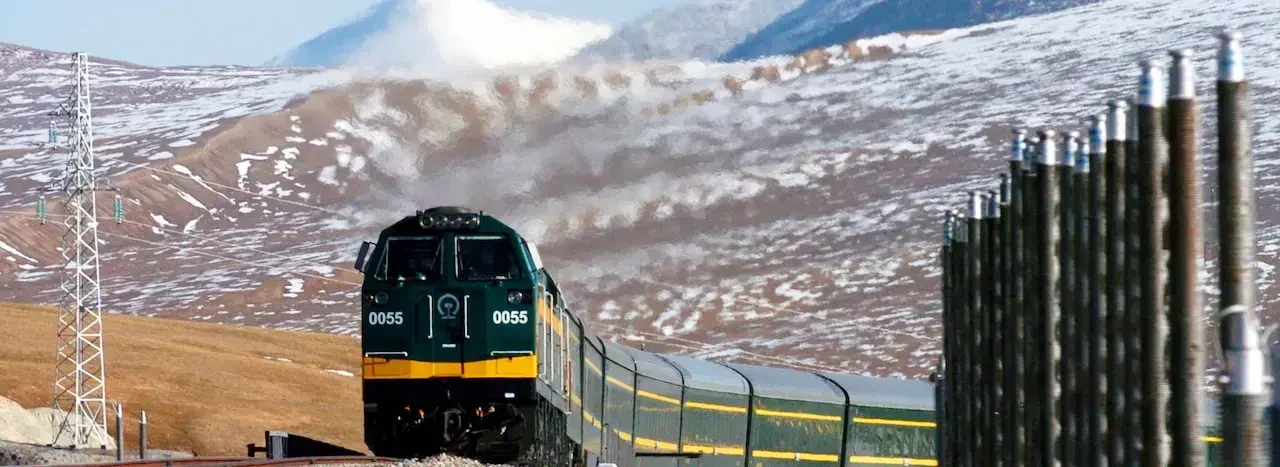
The Qinghai-Tibet train features pressurized passenger cars and individual bedside oxygen ports after climbing past Golmud. Boarding at Xining allows your body to gradually acclimate to the plateau.
Original Tibet Travel Permit Required Before Boarding
Before setting foot on any train platform bound for Lhasa, station attendants and railway police will rigorously examine the physical original paper copy of your Tibet Travel Permit. Digital scans, phone photos, or photocopies are strictly rejected at all departure gates in Xining, Chengdu, and Beijing. Your licensed local agency must courier these original stamped documents to your transit hotel in your gateway city prior to your train departure date.
Allow at least 15 to 20 working days for your local Tibetan agency to process and dispatch the permit before your journey begins.
How the Dual Oxygen Supply System Works
As the train departs Golmud and ascends above 3,000 meters into the Kunlun Mountains, the train crew activates the primary oxygen generation plant. Ambient oxygen in the car air increases by 20%, keeping cabin air pressure equivalent to roughly 2,800 meters.
Each sleeper berth and corridor seat features a dedicated oxygen connector. Train attendants distribute complimentary disposable nasal cannulas. If you feel lightheaded, simply plug in and dial the flow valve.
Every traveler must sign a passenger health declaration form confirming no severe cardiovascular or acute respiratory illnesses before the train begins its mountain ascent.
Key Mountain Passes & Elevation Milestones
- Xining Departure: 2,261 meters (clean gateway to the high plateau)
- Kunlun Mountain Pass: 4,767 meters (gateway into the permafrost wilderness of Hoh Xil)
- Tanggula Pass: 5,072 meters (the world's highest railway pass and highest point on the journey)
- Cuona Lake: 4,594 meters (holy alpine lake viewed just meters from your carriage window)
- Lhasa Station Arrival: 3,650 meters (head directly to your hotel to acclimatize before visiting the Potala Palace)
Soft Sleeper vs. Hard Sleeper: Which to Choose?
Soft Sleeper cabins contain 4 berths (2 upper, 2 lower) with a sliding lockable door, private reading lamps, and substantially more quiet space. For international travelers traveling with camera gear or seeking peaceful sleep, Soft Sleeper is strongly recommended.
Hard Sleeper features open 6-berth compartments (lower, middle, upper). While less private, it is vibrant and social, offering an authentic slice of everyday travel across western China. However, upper berths require climbing steep vertical ladders at high altitude.
After a restful night and waking up in Lhasa, you will be well prepared to explore spiritual landmarks like the Jokhang Temple and walk with local pilgrims along Barkhor Street.
Do
- Drink plenty of hot water from the carriage samovars throughout the journey to combat dry high-altitude air
- Pack easily digestible energy snacks like dark chocolate, nuts, and electrolyte powder
- Keep your original physical permit in your daypack, not buried inside checked luggage
- Take it easy on day one upon arrival in Lhasa; follow our High-Altitude Acclimation Guide to prevent acute mountain sickness
Don’t
- Do not smoke anywhere onboard—smoking is strictly prohibited throughout the train because enriched oxygen is actively circulating
- Do not jog or perform strenuous workouts in the carriage corridors as Tanggula Pass approaches
- Do not schedule packed itineraries immediately on arrival; rest before continuing onward to Shigatse and Everest Base Camp
- Do not discard your ticket or health card until you fully exit Lhasa Railway Station
8 Days Lhasa to Everest Base Camp & Sky Train Journey
8 days · Small Group Guaranteed
Sky Train Frequently Asked Questions
Is taking the train better than flying directly to Lhasa?
Yes for acclimation! Flying from sea level directly to Lhasa (3,650m) exposes you to an abrupt pressure drop. The 21-hour train from Xining allows your cardiovascular system to gently adapt to altitude gains.
What meals and food are served onboard the train?
The dining carriage serves freshly prepared Chinese stir-fry dishes, noodle bowls, and breakfast sets. A food trolley also rolls through compartments offering hot meals, fruit, and snacks.
Are there charging sockets for laptops and phones?
Yes. Both Soft and Hard Sleeper cars provide 220V Chinese three-pin and two-pin sockets located beneath the compartment small table and along the window side tables in the hallway.