
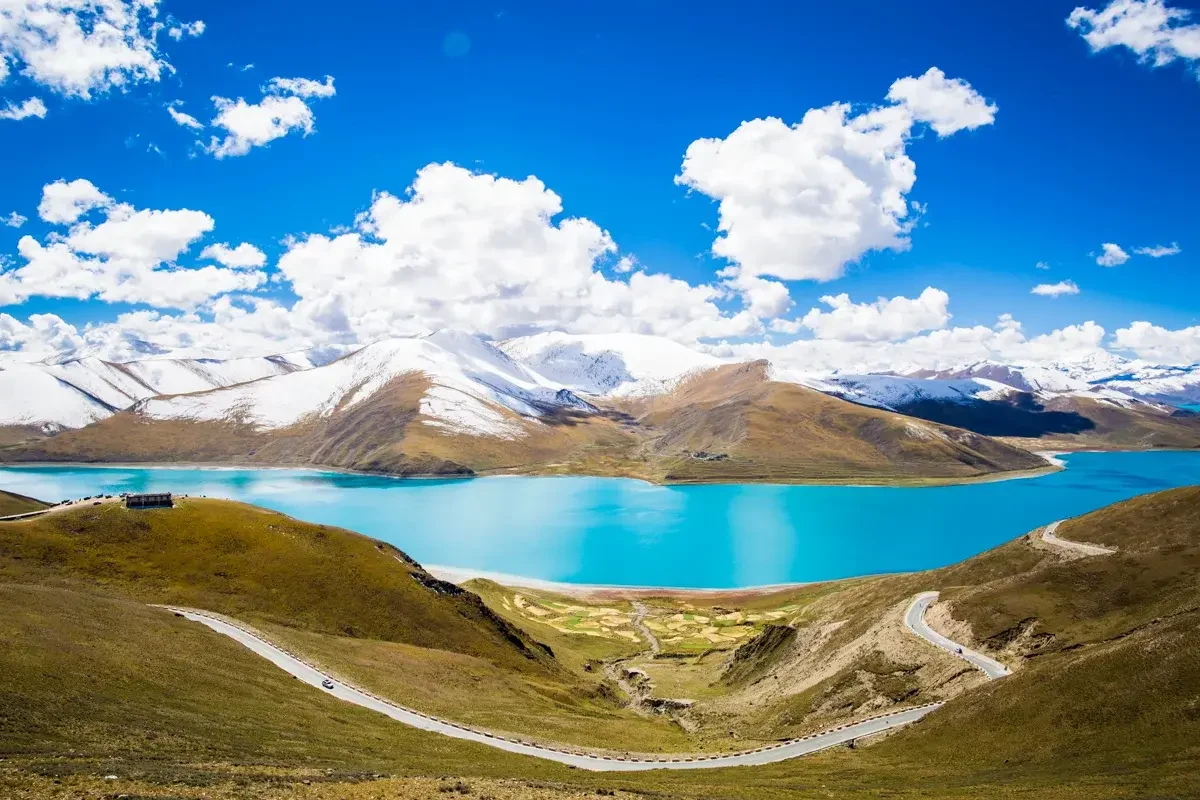
Yes, US citizens can travel to Tibet on an organized tour with a licensed Tibet agency. You need a valid US passport, a Chinese visa (normally the 10-year L visa), and an official Tibet Travel Permit issued by the Tibet Tourism Bureau in Lhasa.
Yes. American citizens can travel to Tibet by joining an organized tour through a registered Tibet travel agency. You need a valid US passport, a Chinese Visa (typically the 10-year multi-entry L visa), and an official Tibet Travel Permit. Independent travel without an agency and guide is strictly prohibited.
Tibet remains one of the most rewarding journeys in Asia for American travelers. In 2026, travel to Tibet for US passport holders is fully open, regulated, and routine. Every year, thousands of visitors from the United States explore Lhasa, Yamdrok Lake, Shigatse, and Everest Base Camp. However, because foreign nationals cannot travel independently inside the Tibet Autonomous Region (TAR), navigating the paperwork requires understanding two separate official steps: securing your Chinese Visa in the United States and having your Tibet Travel Permit issued in Lhasa.
The Two Essential Documents: China Visa + TTB Permit
To visit Tibet, an American citizen needs two mandatory legal documents. You cannot enter Tibet with a Chinese visa alone, nor can an agency apply for your Tibet Travel Permit until your Chinese visa is already approved.
Your passport must have at least 6 months of validity remaining beyond your intended exit date from China and at least two blank visa pages. If your passport expires within 12 to 18 months, renew it first so you qualify for the full 10-year visa.
Under the bilateral reciprocal agreement between the United States and China, eligible US citizens are standardly granted a 10-year multiple-entry Tourist (L) Visa ($140 official consular fee), permitting stays of up to 60 or 90 days per entry.
Issued exclusively by the Tibet Autonomous Region Tourism Development Bureau in Lhasa. By law, individuals cannot apply for this permit directly; only a licensed Tibet-based agency sponsoring your fixed itinerary, guide, and vehicle can submit the filing.
Most standard tourist routes (Lhasa, Yamdrok Lake, Shigatse, and Everest Base Camp) only require the TTB permit — since 4 June 2025, the add-on Aliens' Travel Permit has been waived for EBC, Gyirong, Nyingchi, and Samye. Only western Tibet itineraries (Mount Kailash, Lake Manasarovar, Guge Kingdom in Ngari) still require an add-on Military Permit and Aliens' Travel Permit.
Step 1: Applying for the Chinese Visa in the United States
You apply for your Chinese tourist visa through the China Online Visa Application (COVA) system and submit documents to the Chinese Embassy in Washington, D.C. or the Consulate-General with jurisdiction over your state (New York, San Francisco, Los Angeles, or Chicago), either in person or via an authorized visa agent.
The Golden Rule for US Applicants: Do NOT list Tibet on your visa form
- Never write 'Tibet' or 'Lhasa' under Section 6 (Travel Itinerary) of the COVA application form! Chinese embassies and consulates outside China cannot authorize travel to Tibet.
- Listing Tibet triggers an immediate consular freeze and demands an official Tibet Tourism Bureau invitation letter that agencies cannot generate until your visa is already stamped in your passport.
- What to write instead: List standard mainland cities — for example, Beijing (3 days), Chengdu (4 days), Shanghai (3 days). This is completely standard practice.
- Streamlined documents: Under National Immigration Administration reforms, US tourist (L) visa applicants no longer need to submit flight bookings, hotel reservations, or letters of invitation.
Step 2: Submitting Your Tibet Travel Permit Application
Once your 10-year Chinese visa is stamped into your passport, the application shifts entirely to Lhasa. You email our team clean color scans of your passport photo page and Chinese visa page.
Standard itineraries covering Lhasa, Gyantse, Shigatse, and Everest Base Camp require 15 to 20 working days for Bureau approval. Routes to Mount Kailash in Ngari involve parallel military screening and require at least 25 to 30 working days.
The Tibet Tourism Bureau screens traveler professions. Journalists, media correspondents, professional photographers on assignment, diplomats, and government political affairs personnel cannot use the tourist channel. Normal civilian professions (engineers, healthcare, business, teachers, students, retirees) process without difficulty.
Permits are issued against a specific day-by-day route, vehicle plate, and licensed guide. After your permit is filed, you cannot add new cities or alter the route without submitting a formal amendment.
Entering Tibet from Nepal vs. Entering from Mainland China
American travelers usually enter Tibet via mainland China or via Kathmandu, Nepal. The visa rules for each route are fundamentally different:
Fly or take the train from gateway cities like Chengdu, Xining, Beijing, or Chongqing. You travel under your individual 10-year Chinese L-visa. We courier the original paper permit to your mainland hotel 48 hours before your Lhasa flight.
You CANNOT use your individual 10-year China L-visa! Chinese diplomatic regulations mandate that all travelers entering Tibet directly from Nepal travel under a Chinese Group Visa issued by the Chinese Embassy in Kathmandu (requiring 4 working days in Kathmandu). Warning: The issuance of the Group Visa will temporarily supersede or cancel an existing individual Chinese visa in your passport.
Boarding flights and trains: Document checklist
When traveling from mainland China into Tibet, boarding gate requirements depend on your mode of transport:
Checklist before departing for Lhasa
- Domestic Flights to Lhasa: Airlines at all Chinese mainland airports (Chengdu TFU, Chongqing CKG, Beijing PEK, Xi'an XIY) demand the physical paper ORIGINAL permit with the red seal. Digital copies or phone screens are NOT accepted.
- Qinghai-Tibet Railway: Boarding the train at Xining, Beijing, Shanghai, or Chengdu accepts clear color printouts of the permit at station turnstiles.
- Hotel Delivery: TibetDaily couriers your physical permit directly to your mainland transit hotel front desk 48 hours before departure.
- Guide Custody in Tibet: Your licensed Tibetan guide meets you at Lhasa airport or railway station and holds the original permit for checkpoints throughout your tour.
US State Department Travel Advisory vs Reality
The US Department of State maintains a travel advisory for mainland China and specifically mentions that travel to the Tibet Autonomous Region requires special permits. Some prospective travelers worry this implies widespread permit denials. In practice, commercial tourism permits for eligible US citizens with standard tourist visas are approved reliably throughout the open season. Provided your paperwork is filed through a legitimate registered agency on time and you do not hold restricted government/media occupations, your permit will be granted.
Frequently asked questions
Can US green card holders apply under US rules?
US Permanent Residents (green card holders) apply based on their passport nationality, not their US residency status. If you are an Indian, Canadian, or UK citizen with a US green card, your visa and permit are filed against your passport country.
Can US citizens travel solo in Tibet?
Yes! You can book a solo private tour. 'Organized travel' means you must have a licensed agency, assigned Tibetan guide, and vehicle — it does not mean you must join a bus of strangers. Many Americans prefer private bespoke tours.
Does the 144-hour visa-free transit apply to Tibet?
No. China's 144-hour / 72-hour Visa-Free Transit (TWOV) scheme allows visits only within specific designated provinces and metropolitan zones. You cannot use the 144-hour transit scheme to travel to Tibet; you must hold a full Chinese visa.