Tibetan food: what to eat on the plateau
Tibetan cooking is built around what survives at 3,500 m and above: barley, yak dairy, yak and mutton, and strong tea
Read the guide
Tsampa, butter tea and the long benches of Lhasa's sweet tea houses
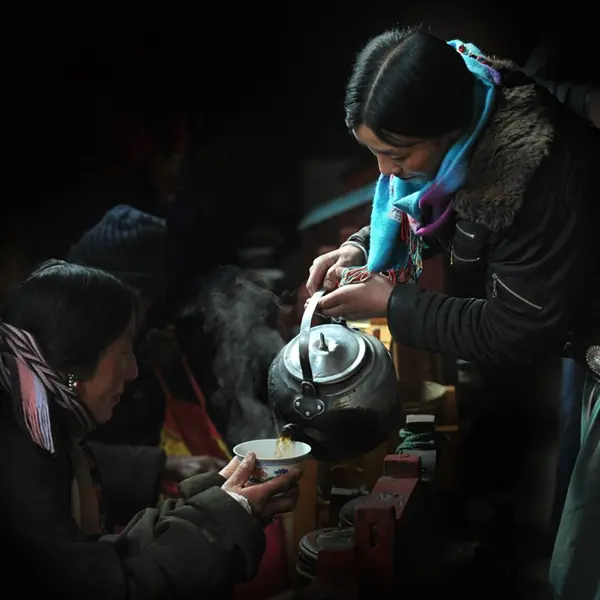
Tibetan food is high-altitude fuel: roasted barley flour (tsampa), yak butter tea by the thermos, momo dumplings and thukpa noodle soup, eaten between 3,000 and 5,000 metres where the body burns through warmth fast. The cooking is plainer than Chinese or Nepali food on either side of the plateau — and better for it, because every dish is judged by substance rather than spectacle.
This channel covers what to order and where: the dishes worth knowing before your first menu, the sweet tea house ritual that anchors Lhasa’s social life, and what mealtimes actually look like on an organised tour.
Tibetan cooking is built around what survives at 3,500 m and above: barley, yak dairy, yak and mutton, and strong tea
Read the guideTibetan food is built around four staples: tsampa (roasted barley flour), yak butter, meat that is dried or stewed, and tea taken by the thermos rather than the cup. It is milder than Sichuan cooking and heavier than Nepali dal bhat — fewer vegetables, more fat and warmth, which is what the body asks for at 3,500 m and above. The everyday dishes to know are momo (steamed or fried dumplings), thukpa (hand-pulled noodle soup) and the sweet milk tea that fills Lhasa’s tea houses from morning to dusk. Our full Tibetan food guide walks through each one, what it costs and how to order it.
| Dish | What it is | Where to try it |
|---|---|---|
| Tsampa | Roasted barley flour kneaded with butter tea | Breakfast tables and monastery kitchens everywhere |
| Butter tea (po cha) | Salted black tea churned with yak butter | Family homes and tea houses; ask for it fresh |
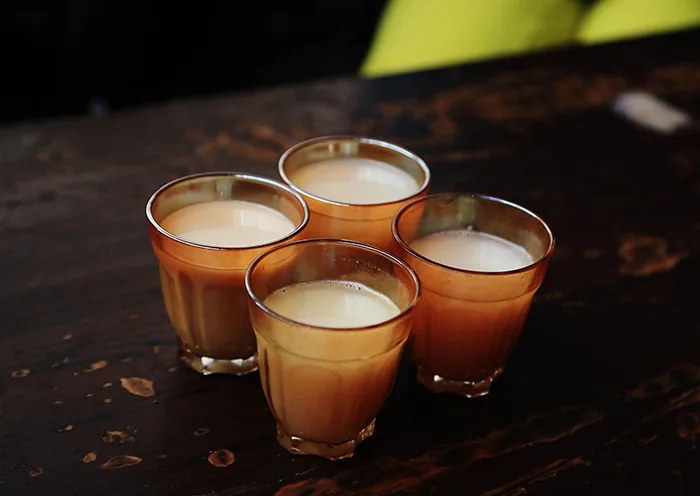
| Sweet tea (cha ngamo) | Milky black tea poured by the glass, a few yuan each | Sweet tea houses around the Barkhor in Lhasa |
| Momo | Steamed or fried dumplings, yak meat or potato | Tibetan restaurants in Lhasa and Shigatse |
| Thukpa | Noodle soup in bone broth | Roadside restaurants on every driving day |
Lhasa has the widest range on the plateau: Tibetan family restaurants around the Barkhor, Sichuan kitchens on almost every street, and Nepali-Indian menus in the traveller quarter. Outside Lhasa the choice narrows as the altitude rises — county-town Sichuan stir-fries, monastery-gate noodle shops, and thermos tea on the high passes. Winter is sweet tea house season: pilgrims fill the benches from November to February, and the tea houses are at their loudest and most local exactly when the tourist calendar is quietest.
Breakfast comes with the hotel, lunch is usually a roadside thukpa or stir-fry chosen by your guide, and dinner is back in town where the menus are widest. Vegetarians manage well with a day’s notice — potato momo, vegetable thukpa and egg fried rice appear on most menus. On a small group tour meals are mostly pay-as-you-go, which keeps you eating where locals eat rather than in tourist canteens. For water, snacks and how altitude changes appetite, see the first-trip essentials guide.
Traditional Tibetan cooking is mild — salt, butter and barley carry the flavour. The chilli on the table comes from the Sichuan influence, and it stays on the table: you control the heat, it is not cooked into the dish.
Yes, with small adjustments. Potato and cheese momo, vegetable thukpa and egg-and-tomato dishes appear on most menus, and Sichuan kitchens cook vegetables well. Tell your guide in advance and lunch stops get chosen accordingly.
A bowl of thukpa or a plate of momo in a local restaurant costs a fraction of the same meal in Beijing, and sweet tea is priced by the glass in single-digit yuan. A full day of eating well in Lhasa often costs less than one tourist-restaurant dinner in Chengdu.
Closer to a thin savoury broth than to tea — salted, rich and warming. Most travellers warm to it by the second glass; locals drink it all day, and at altitude the salt and fat make practical sense.
No — stick to bottled or boiled. Every hotel room has a kettle, every restaurant serves hot water, and the tea houses run on boiled water by definition.