 Beijing Tibet Tours
9 Days Classic Tibet Train Tour from Beijing
Ride the Qinghai-Tibet Railway on a 9-day Tibet & Beijing journey. Train tickets, permits and a Lhasa-based Tibetan guide arranged end to end.
View Itinerary
Board the Qinghai–Tibet Railway in Xining, sleep on the world's highest line, wake up in Lhasa
The Qinghai–Tibet Railway opened in 2006, connecting Xining (2,275 m) to Lhasa (3,656 m) in 21 hours across 1,956 km — the world’s highest operating railway, peaking at the 5,072 m Tanggula Pass. Cabins are pressurised and oxygen-supplemented; the gentle altitude gain makes it the most physiologically considerate way into Tibet.
A Tibet train tour bundles a long-haul rail leg from Xining, Beijing, Shanghai, Chengdu, Xian, Chongqing or Guangzhou with a Lhasa-based itinerary. Most travellers take the train one way (usually inbound, for acclimatisation) and fly the return. Routes run 7 to 13 days depending on the start city and whether EBC is included.
Beijing Tibet ToursRide the Qinghai-Tibet Railway on a 9-day Tibet & Beijing journey. Train tickets, permits and a Lhasa-based Tibetan guide arranged end to end.
View Itinerary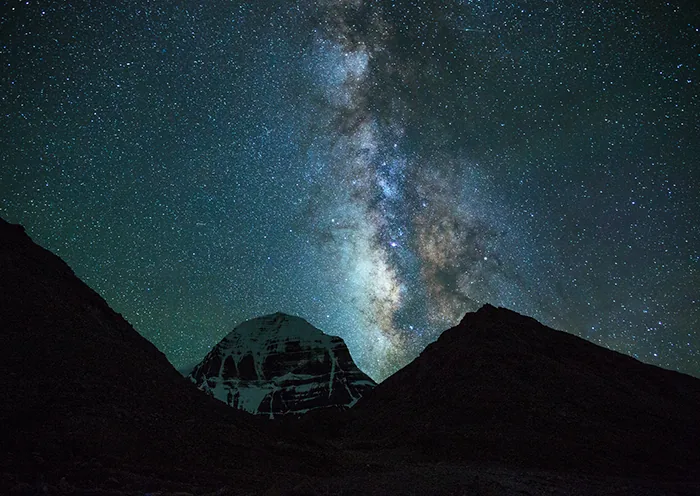 Shanghai Tibet Tours
Ride the Qinghai-Tibet Railway on a 14-day Shanghai & Tibet journey. Train tickets, permits and a Lhasa-based Tibetan guide arranged end to end.
View Itinerary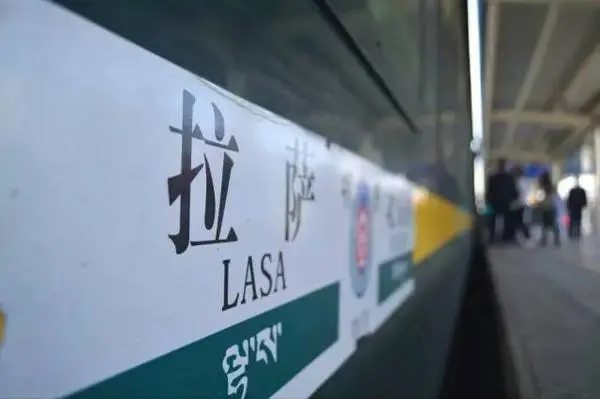 Beijing Tibet Tours
13-day Private Tour: Beijing to Lhasa with Everest Base Camp Tour by Train. Route: Beijing - Lhasa - Gyantse - Shigatse - Mt. Everest - Lhasa. Lhasa-based.
View Itinerary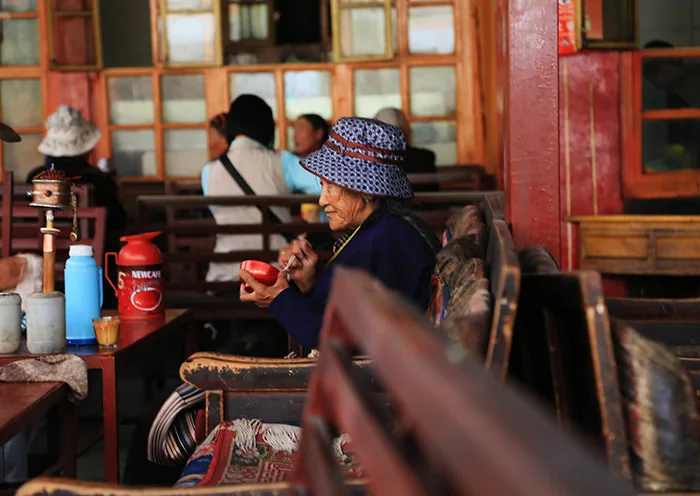 Shanghai Tibet Tours
We explore the heart of the high plateau. From the golden roofs of the Potala Palace and the spiritual chants of Jokhang Temple to the turquoise waters of Yamdrok Lake and Namtso Lake, every moment is profound.
View Itinerary10-day Private Tour: Qinghai-Tibet Railway Tour from Xining to Lhasa & Everest Base Camp. Lhasa-based Tibetan guides; Tibet permits arranged.
View ItineraryA Tibet train tour pairs a long-distance Qinghai–Tibet Railway leg with a Lhasa-based itinerary, almost always with EBC, Yamdrok or Namtso added. The defining segment is Xining (2,275 m) to Lhasa (3,656 m): 1,956 km, 21 hours, crossing the 5,072 m Tanggula Pass — the highest point on any railway worldwide. Cabins are sealed and oxygen-supplemented through individual cabin nozzles; daytime windows look out on the Hoh Xil Tibetan antelope reserve, the Kunlun Mountains and the Tuotuo River, the source of the Yangtze.
Most travellers start the train leg further east — Beijing (40 hours), Shanghai (47 hours), Chengdu (36 hours), Xian (33 hours), Chongqing (35 hours) or Guangzhou (53 hours) — to keep the experience to a single boarding. Xining is the operational hub: most one-way Lhasa-bound services originate or pass through, and the Xining–Lhasa segment alone is enough to claim the railway experience without a multi-day haul.
| Start city | Duration | Distance |
|---|---|---|
| Xining | 21 hr | 1,956 km |
| Xian | 33 hr | 2,864 km |
| Chengdu / Chongqing | 35–36 hr | 2,830–3,030 km |
| Beijing | 40 hr | 3,757 km |
| Shanghai | 47 hr | 4,373 km |
| Guangzhou | 53 hr | 4,980 km |
The train runs year-round. Summer (June–August) is the busiest, with bookings often filling 30 days ahead. The Spring Festival window (late January to mid-February) is the hardest to book, even if Tibet itself is in low season. Train tickets are released 15 days before departure on China Railway’s system; soft sleeper cabins (4-berth) sell out within hours during peak. Tibet Daily holds soft sleepers as soon as deposits clear, and the train ticket is included in the quoted price.
Plan 7–8 days for a short Xining inbound + Lhasa core route. Plan 10–13 days when starting from Beijing, Shanghai or Guangzhou — the train leg itself eats two days of the trip. The Tibet Travel Permit takes 15 working days; the original (paper) permit must be presented at the Lhasa-bound train boarding gate, which is why we courier the permit to your departure city hotel before you board.
We default to soft sleepers (4-berth cabin, lockable door, two pillows + duvet, oxygen nozzle per berth, shared toilet at the end of the carriage). Hard sleepers (6-berth, no door, less oxygen access) are bookable on request and roughly 35% cheaper. The dining car serves Chinese hot meals at fixed times; we send each traveller off with a snack pack and a 2 L water bottle because the cabin air is dry.
What we don’t do: we don’t promise a Tanggula Pass dawn sighting (the train passes the pass in the early morning on Xining-bound trips, late afternoon on Lhasa-bound — verify the schedule of your specific train); we don’t book the standalone “tourist train” services advertised by some China-side agencies (they cost double for marginally better windows); and we don’t sell return train + return train, because the descent loses the acclimatisation benefit and few travellers find a second 21-hour leg appealing.
An 8-day Beijing–Xining–Lhasa group tour starts from USD 1,600 per person; a 7-day Hong Kong–Xining–Lhasa train tour from USD 1,250. A short 6-day Xining-inbound + Lhasa private tour starts from USD 920 per person on 2-pax basis. Prices include the soft-sleeper train ticket, Tibet Travel Permit, all Tibet-side hotels, Tibetan guide and vehicle. International flights to the start city excluded.
From Xining to Lhasa is 1,956 km in 21 hours and 21 minutes (scheduled). From Beijing it is 3,757 km in roughly 40 hours; from Shanghai 4,373 km in 47 hours; from Guangzhou 4,980 km in 53 hours. Trains depart their start city in the late morning or early evening, so you spend one or two nights on board depending on the route.
The Qinghai–Tibet Railway carriages are pressurised and oxygen-supplemented. Each berth has a personal oxygen nozzle. The slow ascent (Xining 2,275 m → Tanggula 5,072 m → Lhasa 3,656 m over 21 hours) is gentler than a Lhasa flight from sea level. Most travellers feel a mild headache as the train climbs above 4,000 m — drink water, eat lightly, sleep. Severe AMS in the cabin is rare.
Soft sleeper: 4-berth cabin, lockable door, individual reading lights and oxygen nozzles, two pillows and a duvet. Hard sleeper: 6-berth open compartment, three-tier bunks, no door, fewer oxygen access points. Both have shared toilets at the carriage end. Tibet Daily defaults to soft sleeper because the lockable cabin matters across a 21-hour journey.
Yes — this is what we recommend for almost every train itinerary. The train inbound gives you the gradual altitude gain and the scenery; the flight return saves a day. Lhasa Gonggar Airport (LXA) flies daily to Chengdu, Chongqing, Xian, Beijing, Shanghai, Kunming and Xining. We bundle the return flight on request.
Yes. Foreign passport holders cannot board a Lhasa-bound train without presenting the original (paper) Tibet Travel Permit at the boarding gate. We courier the original permit to your departure city hotel 48 hours before boarding. A photo or scan is not accepted at the gate.
The Tanggula Pass at 5,072 m, between Amdo (4,800 m) and Naqu (4,500 m), reached roughly midway through the Xining–Lhasa segment. There is also a Tanggula Station at 5,068 m — the world’s highest railway station, though trains do not stop there for passengers. The cabin remains pressurised throughout.
Pick a start city and a 7–13 day route from the Tibet Train Tours archive. Send your passport and Chinese visa scans; we begin the Tibet Travel Permit application immediately. Train tickets are booked the moment China Railway’s 15-day window opens for your specific date. Total booking-to-departure window: 4–6 weeks for off-peak, 6–8 weeks for July/August.