Home / Tours / Tibet Bike Tours

8 Days Tibet Cycling Tour from Lhasa to Namtso Lake – 440km Round Ride

  • TD-TTB-026
  • 8 Days
  • Tibet Bike Tours, Tibet Private Tours

Expedition Overview

Active 8-day Tibet & Lhasa adventure. Pace tuned for altitude, local crew, all Tibet permits arranged from Lhasa.

Tibet Bike Tour: Cycling from Lhasa (Holy City) to Namtso (Holy Lake)

Want to take a cycling tour on the roof of the world? How about a biking adventure at an altitude of 3,650m to 5,190m? Join our 8 Days Tibet Cycling Tour from Lhasa to Namtso Lake, with a 440km Round Ride from Holy City to Holy Lake, you can realize an unforgettable Tibet Bike Tour filled with natural beauty, Tibetan culture, and altitude challenge.

A 220km Cycling Trip from Lhasa to Namtso Lake begins in Lhasa, the capital city of Tibet, renowned for iconic landmarks such as Potala Palace (World Heritage), Jokhang Temple (World Heritage), Barkhor Street, Drepung Monastery, and Sera Monastery. After exploring Lhasa city while acclimatizing to the high altitude for 3 days, you can start your cycling adventure toward Namtso Lake via Qinghai-Tibet Highway. Along the way, you will encounter fellow cyclists, local Tibetans, amazing railways, and magnificent views of the Duilong and Zangbu Rivers. When biking toward Yangpachen & Damxung, you will have the opportunity to witness expansive grasslands adorned with grazing sheep and yaks, as well as traditional shepherd camps.

Your Tibet Bike Tour from Lhasa to Namtso Lake will give you the chance to see the Nyenchen Tanglha Mountain Range (7,162m), one of the holiest mountains in Tibet. You will ride across the Laken La Pass (5190m), the highest point of your bike trip (the real challenge), to reach Namtso Lake which is one of Tibet’s Three Holy Lakes that attracts many Buddhists and pilgrims. Take your time to enjoy the highest saltwater lake in China. Then, cycling back to Lhasa via a visit to Tsurphu Monastery.

Contact us for your 8 Days Tibet Cycling Tour now. Biking from Lhasa to Namtso Lake and worshiping Holy City and Holy Lake like local Tibetan people. It offers a spiritual experience that combines physical challenges with cultural immersion.

Itinerary

Tashi Delek! Welcome to Lhasa, the capital of the Tibet Autonomous Region! Upon your arrival at the airport in Lhasa, the tour guide and driver will meet you at the exit, and then escort you to the hotel in downtown Lhasa (100km, about 1.5 hours’ drive) . You can have a good rest to get used to the altitude (3,650m) in your hotel and get ready to explore Lhasa with your guide the next day.

Arrival Ideas: Lhasa is located in the southern part of the Tibetan Plateau and southwestern China. Traveling to Tibet is convenient by air, railway, or road. There are five airports in Tibet, with Lhasa Gonggar Airport being the most popular for flights from Chengdu (which is also popular), Chongqing, Xian, Beijing, Shanghai, Guangzhou, Kunming, Xining, Shangri-La, and other cities. One international airline even connects Lhasa and Kathmandu. Moreover, travelers can take the train to Lhasa from Xining (21 hours, the starting point of the Qinghai-Tibet Railway), Lanzhou (24.5 hours), Chongqing (35.5 hours), Chengdu (36.5 hours), Xian (31 hours), Beijing (40.5 hours), Shanghai (47 hours), Guangzhou (52.5 hours), Shigatse (2.5 hours), Nyingzhi (4 hours), and other cities.

Kind Reminds:
1. It is good to avoid altitude sickness by slowing down, keeping warm, drinking water frequently, avoiding showers for the first one or two days, taking it easy, and sleeping well.
2. You should always follow your doctor’s advice regarding altitude based on your health condition.
3. Be sure to let your guide or the hotel staff know whenever you feel unwell or need help. The people there are always willing to help and are good at dealing with altitude sickness.

Today you will explore Lhasa for its brilliant architectures, culture, and history, then stroll through the famous Barkhor Street with locals and experience the daily kora life of Tibetans.

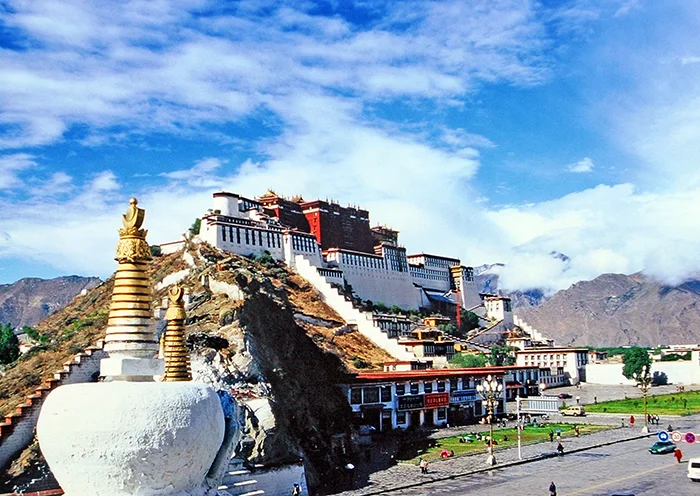
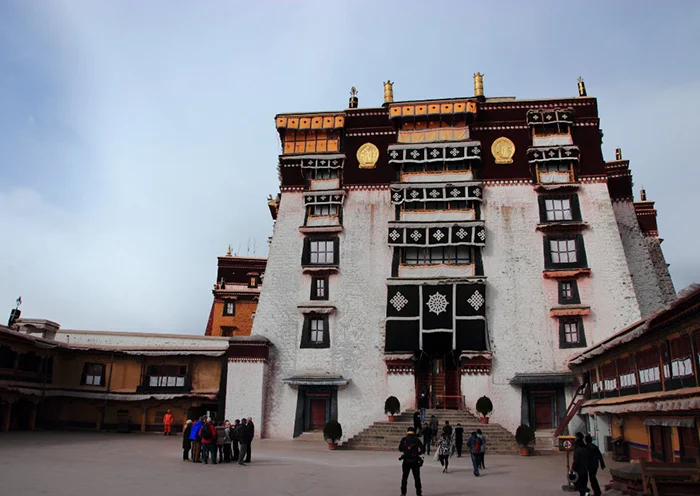
In the morning, you can walk up to the Potala Palace to explore. Not only is it the landmark of Tibet, but it is also the traditional residence and winter palace of the Dalai Lama (1649-1959). After climbing 365 steps from the gate of the Potala Palace to reach the Red Palace, you will arrive at the highest palace in the world at an altitude of 3,700m, where you can enjoy an excellent panoramic view of Lhasa city. As you explore the principal halls, chapels, and shrines of past Dalai Lamas in the Red Palace, you will be amazed and moved by its remarkable paintings, gorgeous jeweled works, skilled carving, colorful ornamentation, and the mystery stories behind the treasures. Inside the Potala Palace, you will meet many Tibetan pilgrims who come from afar to pray at this sacred site, making it a lifetime destination for them. You can also ask your guide to provide more stories about Songtsen Gampo, the 33rd king of Tibet, who first built the Potala Palace in the 7th century for his marriage to Princess Wencheng of the Tang Dynasty.

Please note that the visit order may be adjusted based on the visiting time specified on your Potala Palace ticket. All visitors are required to visit the palace with a tour group and remain inside for one hour. Please be advised that photography is prohibited inside the palace.

After exploring the Potala Palace Museum, move to the 1300-year-old Jokhang Temple, the spiritual center of Tibet and a world cultural heritage site. It is said that the Jokhang Monastery is built for King Songtsen Gampo’s two brides: Chinese Princess Wencheng and Nepal Princess Bhrikuti. “Jokhang” means “House of Buddha”, it houses the statue of the life-size 12-year-old Sakyamuni which is the treasure of the Buddhism world. That is why Buddhist pilgrims take it as the holiest destination. The time seems to stand still when you watch them pray in front of the temple during the day and night.

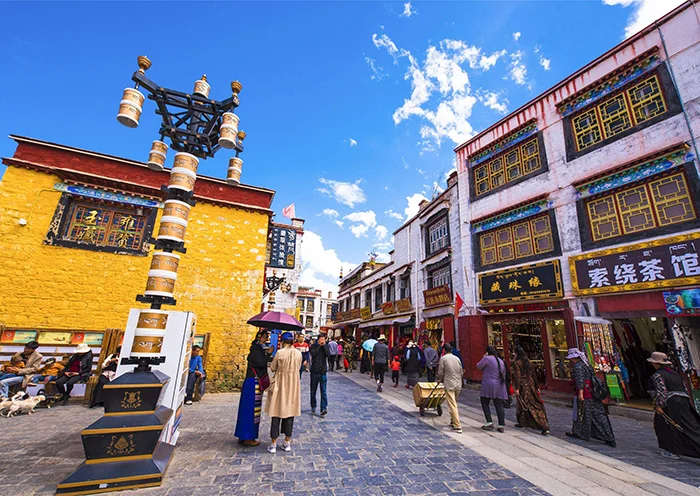
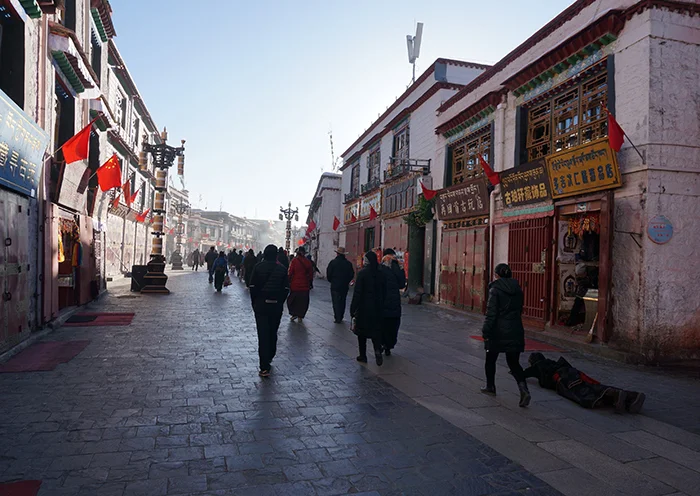
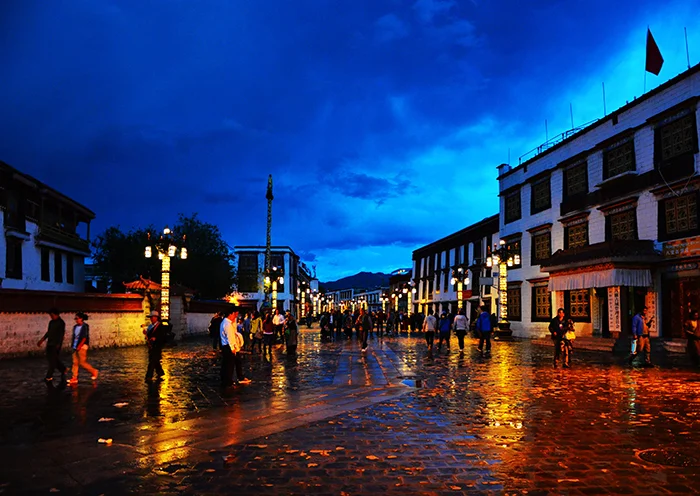
Afterward, take a walk on busy Barkhor Street near the Jokhang Monastery, which was a place for Buddhists to do a kora (pilgrim circuit) in ancient times. Nowadays, it has become a thriving local market where you can drink a pot of yak butter tea, dress in Tibetan clothes for photos, and pick up some local Tibetan, Nepalese, and Indian handicrafts and souvenirs.

Today you will enjoy the culture tour of Lhasa via a visit to two of the “great three” Gelug university monasteries of Tibet, the Drepung Monastery and Sera Monastery.

In the morning, drive about 35min (12km) to visit Drepung Monastery which was the largest Tibetan monastery (Gelug Sect, Yellow Hat) in Lhasa. It used to be Dalai Lama’s palace before he moved to the Potala Palace in the 17th century. Now it is famous for Drepung Shoton Festival held each August, people come to offer yogurt to the monks who finished the 100 days’ meditation while enjoying the grandest Buddha (thangka) unfolding ceremony. Besides the unique architecture and amazing buildings, you can watch monks debating in Tibetan Buddhism vibrant and active with expansive gestures, clapping, and stamping. After Drepung Temple, you will have about a 2-hour Tibetan culture tour, which includes an introduction, Tibetan incense making, and block printing.

In the afternoon, drive another 40min (14km) to visit Sera Monastery. Step on one of the most beautiful monastery compounds, and its white stone roads and walkways makes you feel almost Mediterranean. The highlight of Sera Monastery is watch the monks’ debate at around 15:00 – 17:00 (except Sundays). It is an interesting form of debate, you can see one monk, the questioner, standing while the answerer or group of answerers, sitting. The standing monk will ask question and slap his palms and stomp, each action has its special meaning, such as activating wisdom, and are not meant to be aggressive.

After that, be escorted back to your hotel in Lhasa.

This morning, get your bicycle ready and start your Tibet biking tour from Lhasa to Damxung (Danxiong当雄), covering a distance of approximately 160km (7-8hours) via Yampachen.

After leaving Lhasa, you will cycle on the famous Qinghai-Tibet Highway (青藏公路). The Qinghai-Tibet Highway starts from Xining City in Qinghai Province and ends in Lhasa, Tibet. It is the highest paved road in the world, with an average elevation of 4,000 meters, stretching for 1,937 kilometers. It is also the shortest, best-conditioned, and safest road to Tibet. The road is open year-round, and it is the busiest among the five routes to Tibet, so be sure to be cautious and give way to large trucks during your bike ride. Along the way, you will also encounter the Beijing-Tibet Expressway, Duilongqu River, and Zangbu River. You will pass by Yampachen (4,290m; 羊八井), famous for its geothermal resources and hot springs. Afterward, you can see the guardian deity of the Northern Tibetan Grasslands, Nyenchen Tanglha Mountains (holy mountain;念青唐古拉山脉). In the hearts of Tibetans, Nyenchen Tanglha Peak (7,162m) and the sacred Lake Namtso stand as guardians for each other. They are considered a divine couple, and people come here to worship them. When you feel tired, you can take a break and observe the yaks leisurely grazing in the distance.

As you enter Damxung County (当雄县), you will have the chance to interact closely with the local Tibetans nurtured by the vast grasslands. Experience the simplicity and friendliness of the northern Tibetan nomads. Damxung, which means “Heavenly Pasture (天选的牧场)” in Tibetan, is particularly famous for its horse racing festival, located in the heart of the Qiangtang Grassland (羌塘草原) in northern Tibet. It is home to abundant and rare natural drinking water sources, nurturing 700,000 hectares of pristine natural grazing land, and is known as the “Northern Pearl of Tibet” (藏北明珠 ). Overnight in Damxung and have a good rest.

This morning, cycle approximately 60 km from Damxung to Namtso Lake (about 4 hours) via Laken La Pass (Nagenla Pass).

Along the way, stop to admire the Nyenchen Tanglha Mountain Range (7,162m), one of the holiest mountains in Tibet. You might come across Tibetan yaks and sheep, and if you are lucky, you may even spot wild animals like kiangs (wild donkeys), pikas, hares, and foxes. The most challenging part of today’s ride is ascending to Nagenla Pass (5,190m), which is the highlight and a significant challenge of this journey. On clear days, when you look north from the pass, you can catch a glimpse of Namtso Lake. If needed, a support vehicle can transport you and your bike over the mountain pass.

After crossing Nagenla Pass, you will reach Namtso Lake (4,730m), one of the highest lakes in the world. Namtso Lake is one of the most beautiful and sacred lakes in Tibetan Buddhism. Considered the residence of a Tibetan goddess, the lake is one of Tibet’s three holy lakes and attracts many Buddhists and pilgrims. Surrounded by snow-capped mountains and vast grasslands, Namtso Lake (the highest saltwater lake in China) offers a breathtaking landscape. The crystal-clear waters change color throughout the day, from deep blue to turquoise. Photograph the colors of the lake, the Nyenchen Tanglha Mountains to the south, and Tibetan nomads. According to legend, the lake is the mountain’s wife, and they are inseparable companions.

Explore Tashi Dor Island, the lake’s largest island, hike the area, visit monasteries, and revel in the peaceful atmosphere. Enjoy the sunset near the Namtso Lake. Overnight in Namtso (Needs to be confirmed according to your travel time).

Today you will cycle from Namtso to Yampachen Town to enjoy the Yampachen Hot Spring via Damxung (130km, about 7 hours). You may love to see the sunrise at the holy Namtso Lake this morning while have a hike around Tashi Dor Island. Then, ride to Yampachen.

During your biking tour, you can have another exploration over vast grassland dotted with sheep and yaks, traditional Tibetan shepherds camp, the Nagenla Pass challenge, the charming Nyenchen Thanglha snow mountain, and more. When arrive at Yampachen (Yangbajing羊八井), situated at an altitude of 4,290 meters, you will find it is surrounded by peaks reaching elevations of 5,500 to 6,000 meters above sea level. These peaks are home to modern glaciers, while the Zangbu River flows through the region. The Qinghai-Tibet Highway and China-Nepal highway pass through the eastern and northern parts of Yampachen, providing convenient transportation. As a geothermal town, Yampachen features some vegetable farms, livestock products, and power plants. The power plant alone generates 45% of the annual electricity consumption in the Lhasa power grid. In Yampachen, there are spacious roads lined with shops, restaurants, and entertainment venues, alongside tall factory buildings and modern-style employee dormitories, schools, traditional herders’ residences, and tents. The most famous feature of Yampachen is its geothermal hot springs. These hot springs, free from sulfur odors, offer high temperatures and are an excellent way to relax and relieve fatigue after your bike ride (remember not to soak for too long). During the day, you can observe leisurely grazing cattle and sheep, listen to the roaring of the river, and experience the vastness of the sky. At night, you can witness the magnificent rise and fall of the Milky Way and occasionally catch a shooting star streaking across the clear sky.

Overnight in Yampachen.

Today you will cycle from Yampachen back to Lhasa (90km, about 7-8 hours) via a visit to Tsurphu Monastery.

The most beautiful time in Yampachen is every early morning. Due to the relatively cold air, the geothermal field of Yampachen is often shrouded in white mist. Enormous steam clouds rise from the lake’s surface, creating a scene akin to a heavenly realm. If you’re lucky, you may witness the eruption of a hot spring, where boiling water shoots up into the sky from the spring’s source, presenting a magnificent and awe-inspiring spectacle.

Then, you will bike to explore Tsurphu Monastery. Lying deep in the valley, Tsurphu Monastery is located 76 kilometers from Lhasa at an altitude of 4,500 meters. Dating back to the 11th century (over 800-year-old), it is a gompa that served as the traditional seat of the Karmapa, the head of the Karma Kagyu lineage of Tibetan Buddhism. Every year, during the 9th, 10th, and 11th days of the 4th Tibetan month (around May), people come to celebrate the Saga Dawa festival by performing ritual cham dancing and unfurling a great Thangka on the platform across the river from the monastery. Tsurphu Monastery is the place where the living Buddha reincarnation system of Tibetan Buddhism began. Now it is also the residence of the current living Buddha Karmapa, the reincarnated lama of the Kyigyapa sect of Tibetan Buddhism.

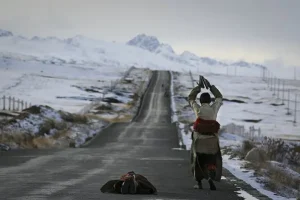
After visit, bike toward Lhasa. Along the way, you will encounter Qinghai Tibetans on their pilgrimage to Lhasa. They set off from their hometowns and travel along the Qinghai-Tibet Highway, prostrating themselves and kowtowing all the way. With their bodies touching the ground and crawling forward, their unwavering determination reflects their profound devotion. As a bike rider, you are not alone.

After the tour, cycling back to Lhasa and have a good rest.

It is time to end your 8-day Tibet Cycling Tour. Your guide will escort you to the airport/train station for your flight or train to your next destination.

Extension Ideas: If you prefer to travel longer in Tibet, you can extend your trip to other highlighted parts of Tibet, including Shigatse, Gyantse, Everest Base Camp and Mount Kailash.

Thank you for choosing Tibet Daily (TD) for your Tibet Bike Tour, and we are always here working for you and hope to see you again for your next trip to China/Asia. Safe journey!

Make an inquiry

Free inquiry. No payment required. We reply within 24h.

Accommodation & Hotel Condition for Your Tibet Tour

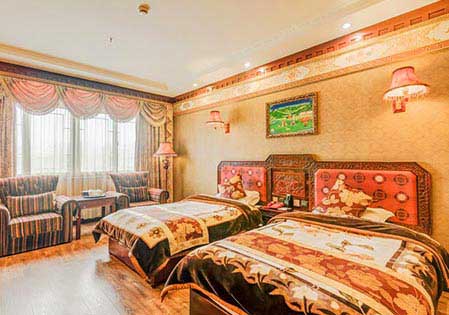
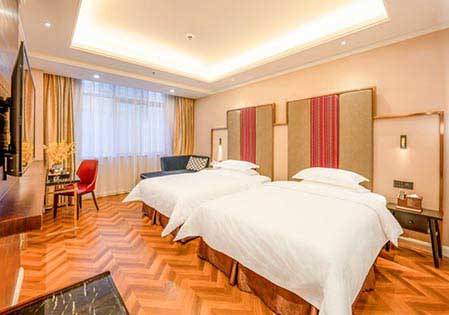
Have a good sleep everyday is very important during your China tour. In a private tour, you can decide on your own which hotel class you want – luxury 5 starcomfortable 4-star or economic 3-star.
All the hotels in each destination we selected are at good location, close to commercial street or tourist attractions. And, all the hotels we use have a business relationship for many years and they have windows, air-conditioners, hot water, showers, wifi… (except for basic accommodation condition when travel to Mount Everest) to ensure you luxury and comfortable sleep experience. The staff can speak English and they will provide you the high quality service. If you have any requirements, you can ask them to help.
What’s Included & What’s Not Included

•  The price is based on a group tour for 2 people sharing one standard double-bed room in comfort hotels.
•  Price varies depending on travel date, group size, hotel class, program in your itinerary and possible fluctuation of currency exchange rate.

What’s Included

Transportation
•  Regular licensed tourist vehicles (7–26 seats).
•  If there are fewer than 4 travelers for Lhasa city sightseeing, your guide will accompany you by taxi, and the taxi fare will be covered by the travel agency.
•  This is a join-in group tour, so changes of vehicles or guides may occur. Thank you for your understanding.
•  Due to Tibet’s limited tourism infrastructure, vehicles are generally older than those in mainland cities.
•  Most vehicles do not use air conditioning, as high altitude and temperature differences can cause mechanical issues and increase the risk of catching a cold.
•  There are driving speed limits in certain regions of Tibet (e.g., specific sections must not be completed in less than two hours). Your driver may stop at random points for rest or waiting—please be patient and enjoy the scenery.
•  When joining a group, pickups may involve waiting while collecting guests from multiple hotels. Please be punctual; if you voluntarily give up any day’s travel, the vehicle fee cannot be refunded.
•  Luggage policy: To ensure safety and comfort at high altitude, each traveler may bring one 26-inch suitcase and one small backpack. The guide will assist in storing excess luggage at your Lhasa hotel if necessary.

Accommodation
•  Standard twin rooms in basic hotels (double occupancy). Single-bed rooms (king-size) are not guaranteed; no extra bed or breakfast is provided for travelers not occupying a bed.
•  In case of odd-numbered travelers, the agency may arrange triple rooms, room-sharing, or charge a single supplement.
Fixed hotels are pre-arranged for group tours; specific hotel requests cannot be accepted.

Meals
•  Daily hotel breakfasts included.
•  Onecomplimentary local specialty meals (non-refundable if not used):
Lhasa Specialty Meal (Tibetan or Nepalese cuisine)
Other meals are self-arranged. If you are unaccustomed to Tibetan food, you may bring your own side dishes.
•  Complimentary meals may be arranged as lunch or dinner.

Guide Service
•  Chinese-speaking, English-speaking, or bilingual (Chinese-English) guides.
Guides are arranged according to the group composition. If both Chinese and English speakers are in one group, a bilingual guide will be provided.
•  In shared group tours, guide or vehicle changes may occur – your understanding is appreciated.

What’s Not Included

Single Room Supplement
•  Tour prices are based on twin-room occupancy (except for dormitory-style rooms).
•  If you require a single room, an additional single supplement fee will apply.

Hotel Changes or Hotel Cancellation Loss
•  Since hotels are prepaid in full, no refunds will be issued for any unused nights or itinerary changes after check-in.
•  Any damage to hotel property or extra charges incurred will be the traveler’s own responsibility.

Personal Expenses
•  All personal expenses are not included, such as:
Laundry, telephone, fax, or pay TV
Drinks, snacks, tobacco, or alcohol
Any other items or services of a personal nature

Unforeseen Circumstances
•  In case of force majeure or events beyond the control of the travel agency (such as natural disasters, war, strikes, epidemics, flight delays or cancellations, or insufficient group size),the agency reserves the right to cancel or adjust the itinerary.
•  Any extra costs incurred as a result will be borne by the traveler.

Transportation to and from Tibet
•  The tour price does not include flights or train tickets to and from Tibet. If you would like the travel agency to assist with booking, additional costs will apply.

Cancellation Policy

In the event that you need to cancel your trip, please ensure that you submit a written cancellation request. The calculation of cancellation fees will begin from the date we receive your written request.
The cancellation fees will be calculated as follows:

• If the cancellation is made between 45 and 30 days before the scheduled departure date, a fee of 10% of the full payment per person will apply.

• If the cancellation is made between 29 and 15 days before the scheduled departure date, a fee of 30% of the full payment per person will apply.

• If the cancellation is made between 14 and 7 days before the scheduled departure date, a fee of 50% of the full payment per person will apply.

• If the cancellation is made between 6 and 0 days before the scheduled departure date, a fee of 100% of the full payment per person will apply.

Important Trip Notes

All foreign travelers are required to obtain a Tibet Travel Permit to visit Tibet. The permit can only be applied for through a registered travel agency in Tibet (we are local based Tibet travel agency with office setting in Lhasa) and is required to purchase flight or train tickets to Tibet. The permit is necessary to enter Tibet and visit certain areas within the region, including Lhasa and Mount Everest Base Camp. Travelers should plan ahead and allow sufficient time for the permit application process, as it can take one to two weeks to obtain the necessary permits.
All foreign travelers are advised to make their bookings at least one week in advance and send the necessary documents to us for obtaining the permits. However, if you plan to visit Mount Kailash, it is recommended to book at least two weeks in advance, as it may take longer to obtain the necessary permits.

Typically, small group tours in Tibet will have 1-16 travelers, and you will have the opportunity to meet and travel with tourists from different parts of the world. This can be a great chance to make new friends and connect with people from different cultures and backgrounds.

Yes, if you are traveling with a group of friends or with your family, you can customize your own group tour. Please contact your professional travel consultant to discuss and arrange a customized group tour that meets your needs and preferences.

 
•  “B” stands for breakfast. You will have it at your hotel in the morning.
 
•  “L” stands for lunch. The restaurants we will arrange for you are all designated tourist restaurants approved by local tourist administration bureau. All are in good sanitary conditions. Lunches are usually included if you have a full day tour in one destination. Your guide will assist you with ordering the dishes. If you will travel from one city to another, lunches are excluded and you can ask the guide for some suggestions about where and what to eat.
 
•  “D” means dinner. All dinners are excluded in the itinerary. You have the chance to taste some authentic Chinese food and local snacks.
 
•  If you have special dietary requirements (vegetarian, halal, kosher, Indian, or gluten-free), please let us know before your booking. We will try our best to take care of you.

Book Your Expert-Led Tibet Discovery

Ready to see Tibet differently? Join our specialized local team for an authentic, high-altitude experience designed to go far beyond the typical tourist route. With vetted logistics, expert local guides, and a passion for deep cultural immersion, we guarantee a journey that is as safe as it is transformative. Secure your spot today—your path to the heart of Tibet starts here.

Expert-Guided Cultural Deep-Dive

Not just tours, but true immersion. Unlike generic sightseeing, our routes are crafted by local scholars and Himalayan experts. You aren’t just visiting landscapes; you are entering stories, gaining insights into Tibetan history, Buddhism, and plateau life that remain invisible to the standard traveler.

Authentic & Transparent Journey

Zero commercial pressure. We believe your pilgrimage belongs to you alone. We strictly adhere to a 100% No Shopping Stops policy, ensuring every moment of your precious time is spent exploring sacred heritage and breathtaking nature—never in a commercial trap.

Perfectly Paced Exploration

Slow travel in high-altitude comfort. We prioritize both your safety and your experience. Our itineraries are masterfully paced for high-altitude acclimatization, blending iconic ‘big wow’ landmarks with secret, hidden gems, allowing you to breathe in the plateau’s serenity without ever feeling rushed.