Home / Tours / Tibet Group Tours

14 Days Ultimate Tibet Group Tour: Mount Kailash, Guge Kingdom & Hidden North

  • TD-TGT-F3
  • 14 Days
  • Tibet Group Tours

Expedition Overview

2-week small group to explore Tibet! This 14-days Tibet Grand Loop tour to Lhasa, Mount Kailash (3-day Kora), Guge Kingdom, Northern Tibet (Shiquanhe-Ngari Region) with many holy lakes. Budget price, safe trip with local agency!

Lowest Price Guarantee. Reserve Now and Pay Later.

Want an in-depth discovery of Tibet? Ready to go off the beaten path on a grand circular route? This journey takes you through some of the most remote and awe-inspiring corners of the plateau – both relaxes your body and enriches your spirit. In 2026, the Year of the Horse, give yourself this meaningful gift. Travel safely and joyfully with like-minded friends on this two-week adventure.

This is the ULTIMATE 14-day Tibet Daily in a small group! The CLOCKWISE LOOP starts from Lhasa through Shigatse and the sacred land of Ngari, then across the northern plateau back to Lhasa. It perfectly weaves together “Sacred City – Holy Lakes – Sacred Mountain – Ancient Kingdom – Northern Wilderness – Holy Lakes”. A journey begins in faith, witnesses nature, and ends with the soul’s quiet return.

You’ll Experience Cultural Essence: Explore Potala Palace (the heart of Tibetan Buddhism), Jokhang Temple (a place of deep devotion), the Kailash Kora (the ultimate spiritual and physical challenge), and the Guge Kingdom ruins (the lost civilization of Tibet).

You’ll Marvel at Natural Wonders: Discover world-class landscapes – sacred lakes (Manasarovar), snow peaks (Kailash), glaciers (Karola), desert dunes, the Zanda Earth Forests, and countless pristine lakes across northern Tibet – truly a paradise for nature lovers and photographers.

Tip: The Year of the Horse is the grand pilgrimage year for Mt. Kailash – completing the kora brings TWELVE TIMES the spiritual merit. A once-in-a-lifetime chance to circumambulate the mountains, lakes, and your own heart. Don’t miss it!

Itinerary

Tashi Delek! Welcome to Lhasa, the capital of the Tibet Autonomous Region! Upon arrival at Lhasa Gonggar International Airport or Lhasa Railway Station, our friendly Tibetan guide will greet you with a Hada (a traditional white silk scarf) and warm blessings. (Tip: Please let us know your mode of transportation and arrival time in advance.)

After that, our guide and driver will escort you to your hotel in downtown Lhasa. (Tip: The airport is located about 60 km southeast of the city, 1-1.5 hours’ drive.)

After check-in, take the rest of the day to relax and acclimatize to Lhasa’s high altitude (3,650 m). It’s important to allow your body to adjust before beginning your exciting journey through Tibet.

Helpful Reminders for Your First Day in Lhasa

  • Take a good rest and stay calm.This is the best way to prevent altitude sickness.
  • Avoid strenuous activity and you’d betternot take a shower on the first night to prevent catching a cold.
  • Do not drink alcohol. Instead, drink plenty of water, eat fruits, and avoid heavy meals.
  • If you wish, you can prepare herbal or oxygen supplements such as Rhodiola, American ginseng lozenges, or Gaoyuan’anto help with adaptation.
  • Always follow the advice of your local guide. If you feel unwell, inform your guide and seek medical attention promptly.

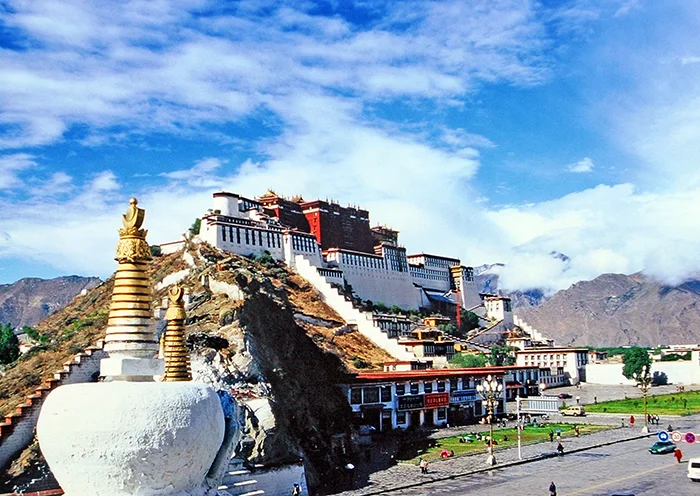
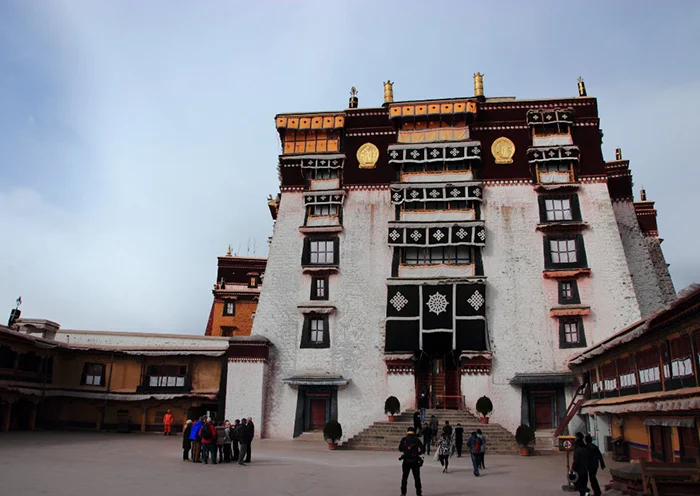
Today, it is the time to explore Lhasa by visiting the world-famous Potala Palace, a World Heritage site and the picture behind the 50 RMB. And then, you will explore Lhasa by visiting Jokhang Temple, a world cultural heritage site renowned for its brilliant architecture, culture, art, and history. Finally, you can stroll through the famous Barkhor Street with locals and learn more about the daily kora life of Tibetans.

This morning, you’ll first explore Potala Palace. This is the most iconic landmark of Tibet and the former winter residence of the Dalai Lamas (1649-1959).

After climbing 365 stone steps from the palace gate to the Red Palace, you’ll reach the highest ancient palace in the world – standing proudly at 3,700 meters above sea level – and enjoy stunning panoramic view of Lhasa city.

As you wander through the halls, chapels, and sacred shrines that honor past Dalai Lamas, you’ll be captivated by the intricate murals, exquisite carvings, dazzling jeweled decorations, and the deep spiritual atmosphere that fills the air. Inside the Potala Palace, countless Tibetan pilgrims can be seen bowing and praying devoutly – for many, visiting this sacred site is the journey of a lifetime.

Your guide will also share fascinating stories about King Songtsen Gampo, the 33rd ruler of Tibet, who originally built the Potala Palace in the 7th century to honor his marriage to Princess Wencheng of the Tang Dynasty.

Potala Palace Visiting Tips:

  • All visitors must enter as part of a guided group and can stay inside for a maximum of one hour.
  • Tickets are issued under a real-name reservation system. A valid ID or passport is required, and once reserved, rebooking is not allowed within 7 days.
  • Entry times are assigned randomly by the Potala Palace Administration, and it’s not possible to choose your visiting hour.
  • During peak season, your travel group may be split into smaller sub-groupswith different visiting times or guides.
  • Photography is strictly prohibited inside the palace.

We will take you to fully immerse yourself in experiencing traditional Tibetan handcraft Center, including making Tibetan incense, woodblock printing and learning about the Tibetan language. While learning about how the refreshing Tibetan incense is made, you can also participate in making it with your own hands, which is of quite different significance from the purchased Tibetan incense. Knowledgeable teachers will introduce to you the origin of the Tibetan language and help you write Tibetan blessings or your own Tibetan name. Meanwhile, you can also experience the traditional woodblock printing. The incense, printed words and Tibetan calligraphy can all be taken home as souvenirs.

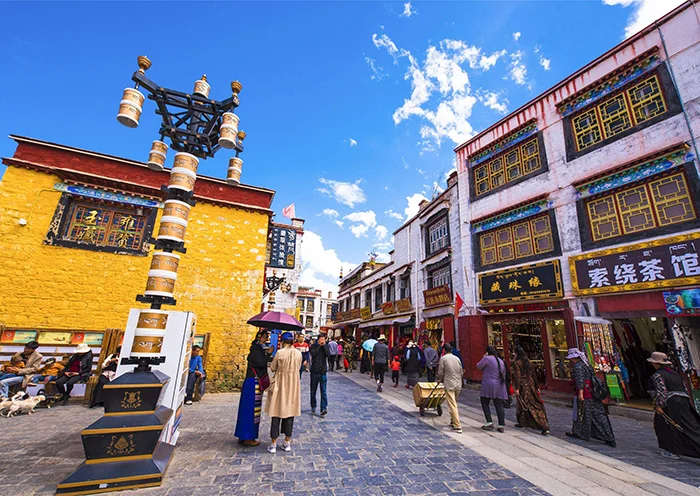
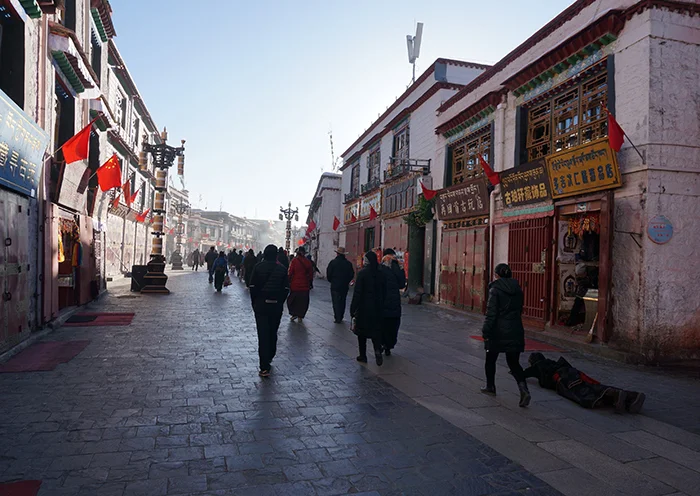
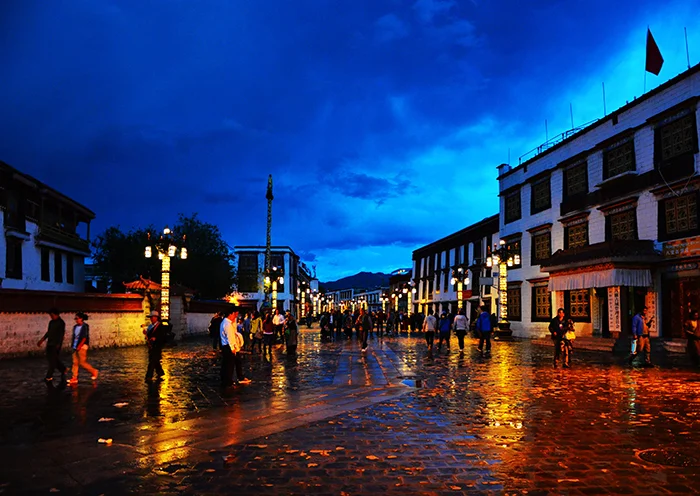
After the visit, step outside to Barkhor Street, once the traditional kora (pilgrimage circuit) around the temple. Today, it’s a lively place filled with the scent of incense and the sounds of chanting pilgrims. You can sip yak butter tea at a teahouse, dress in Tibetan attire for photos, or shop for unique handicrafts and souvenirs from Tibet, Nepal, and India.

After the tour, be escorted back to your hotel in Lhasa.

Today, you’ll embark on a scenic drive from Lhasa to Shigatse, Tibet’s second-largest city. The journey covers around 370 kilometers and takes 7 hours’ drive, with stops to admire two of Tibet’s most spectacular natural wonders – Yamdrok Lake and Karola Glacier.

In the morning, after about 2-3 hours of driving (110 km), get your camera ready as you approach Kampala Pass (4,797 m). Here, you’ll be rewarded with a breathtaking panoramic view of Yamdrok Lake, a turquoise ribbon shimmering among snow-capped mountains. Known as one of Tibet’s four sacred lakes (along with Lhamo Latso, Manasarovar, and Namtso), Yamdrok is believed to hold spiritual power – helping Tibetans locate the reincarnated soul of the Dalai Lama. You’ll also see locals offering photo opportunities with Tibetan mastiffs, yaks, or goats dressed in traditional ornaments.

In the afternoon, continue driving for about 1.5 hours (87 km) to reach the stunning Karola Glacier (5,012 m) – one of Tibet’s three major continental glaciers and a filming site of the movie Red Valley (Hong He Gu). Backed by Naiqin Kangsang Peak (7,191 m), the glacier gleams like a frozen waterfall cascading right beside the highway. You can enjoy the view from your vehicle or take a short, easy walk to the glacier’s base. Across the road, admire the majestic snow-capped Mount Kalurong – another highlight of this alpine wonderland.

Tips for visiting Karola Glacier:

  • The alitude here is about 5,012 meters, so move slowly and avoid overexertion.
  • The public toilets are very basic -be prepared.
  • Some locals may charge a small fee for taking photos with them or their animals -always confirm before photographing.

Afterward, drive about 3.5 hours (170 km) through Gyantse, aalong the wide Nianchu River Valley, passing through scenic Tibetan villages, vast barley fields, and golden rapeseed flower fields (in summer). Upon arrival in Shigatse (altitude: 3845 meters), check into your hotel and rest well.

Warm Reminder:

For foreign and Taiwan travelers, registration at the Shigatse Entry & Exit Administration Office is required. Your guide will assist with the process and may adjust the schedule accordingly – please follow their instructions and cooperate as needed.

After breakfast, your group will leave Shigatse – the cultural heart of western Tibet – and set out on a long but scenic drive westward to Saga Town (about 450 km, about 8 hours).

As you leave the bustling city behind, your journey heads west along the Nyanchu River Valley, historically known as the Breadbasket of Tibet. Along the way, you’ll pass through vast farmlands where barley and rapeseed flowers sway gently in the breeze, reflecting Shigatse’s long-standing reputation as the region’s granary.

Gradually, the fertile valley opens into the wide, wild beauty of the western plateau. On the way, make a stop in Sangsang Town to visit the stunning Sangsang Grassland (altitude: 4,567 meters). Here, you will encounter a vast green sea in summer. The fields bloom with purple pedicularis and yellow Galsang flowers, while herds of yaks and Tibetan sheep graze freely like stars scattered across a green carpet. Overhead, eagles circle gracefully, and the wind carries the scent of wild grass. This pure, untamed life of the Tibetan plateau will simply amaze you.

After the visit, your group will continue the drive, heading westward to Saga Town. Out of your window, you will see the distinctive landscape of alpine meadows and arid grasslands. You will also have the opportunity to gaze upon the northern peaks of the Himalayan mountain range in the distance.

You will arrive in Saga Town (altitude: 4640 meters) in the late afternoon and check into your hotel.

After breakfast, your group will set out along the G219 Highway. Enjoy the drivie from Saga Town toward Darchen, the gateway to Mount Kailash. It is never boring on road, changing landscapes, Tibetan villages and farmlands, holy mountains and lakes.

As you leave Saga behind, the road gradually ascends along the northern foothills of the Himalayas, where the landscape unfolds in layers of color and texture. In Zhongba, small Tibetan villages appear like splashes of color against the edge of the desert, fluttering prayer flags dancing in the wind. You’ll pass through a vast dune belt (Zhongba Colorful Desert) – its sands tinted red, yellow, and white by rich minerals. Under the bright plateau sun, the dunes shimmer like silk against the distant backdrop of snowcapped mountains and winding rivers – a true visual feast.

Continuing westward, you’ll cross the shores of Lake Gongzhucuo, whose deep sapphire waters mirror the majestic Gangdise Mountains beyond. The scene feels both tranquil and otherworldly.

Soon after, you’ll reach one of the most sacred and breathtaking moments of your Tibetan journey: the sudden appearance of Lake Manasarovar and the legendary Mount Kailash. Rising high above the surrounding peaks, Mount Kailash’s perfectly symmetrical snow-covered cone forms a divine tableau with the shimmering lake below. Revered by Buddhism, Hinduism, Bon, and Jainism, Lake Manasarovar is believed to be the source of four of Asia’s great rivers – the Yarlung Tsangpo, Indus, Sutlej, and Karnali. Along the lakeshore, you may see pilgrims walking clockwise around the holy lake, spinning prayer wheels and chanting softly as they etch their devotion into every Mani stone along the way.

By late afternoon, arrive at Darchen Town (altitude: 4670 meters). This is the base and starting point for the Mount Kailash Kora (pilgrimage circuit). Check into your hotel and rest well in preparation for the next spirtual circuit.

Mount Kailash, is a towering peak that rises to 6,638 meters and dominates the landscape of Western Tibet. Revered by four major religions – Tibetan Buddhism, Hinduism, Bon, and Jainism, this holy mountain is considered the spiritual center of the world. In Tibetan Buddhism, it is believed to be the abode of Demchok, the deity symbolizing supreme bliss. Each year, countless pilgrims make the arduous journey here to walk the 52-kilometer kora (circumambulation) around the sacred mountain, a deeply spiritual act believed to cleanse one’s sins and bring enlightenment.

Day One Trek: Darchen – Tarboche – Dira-puk Monastery

This morning, your group will take a short sightseeing bus ride from Darchen Town to Tarboche (Prayer Flag Square, 6km from the town). This is the official starting point of the kora and one of the most sacred ritual sites in Tibet. Every year during the Saga Dawa Festival (“Fourth Month” in the Tibetan calendar), hundreds of pilgrims gather here to raise the towering flagpole adorned with prayer flags, celebrating the birth, enlightenment, and death of Buddha Sakyamuni.

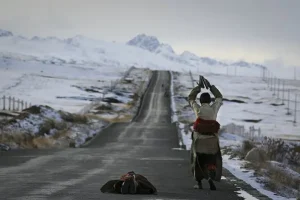
Now, begin your first day of trekking, following the Lha Chu River valley westward. The route is graced by blue skies, snow-capped peaks, and slopes dotted with mani stones engraved with sacred mantras. Along the way, you’ll see Tibetan pilgrims performing prostrations as they slowly make their way around the mountain – a moving testament to faith and devotion. This section is both physically demanding and spiritually rewarding, offering magnificent views of Mount Kailash’s western and northern faces.

As you venture deeper into the valley, the north face of Mount Kailash gradually reveals itself in full grandeur, an awe-inspiring sight that few places on Earth can rival. After trekking about 14 kilometers, you’ll arrive at Dira-puk Monastery, your destination for the day. This monastery, belonging to the Nyingma sect of Tibetan Buddhism, sits directly opposite the north face of Mount Kailash, providing an unparalleled view of the sacred mountain.

You will spend the night in a local guesthouse near Dira-puk Monastery.

Travel Notes:

  1. Local Tibetans around Mount Kailash offer optional services such as horse or yak rides, and luggage transportby yaks or porters (not included in the tour price).
  2. During the kora, accommodation is very basic, typically in shared guesthouses or tents at Dira-pukand Dzultripuk, with limited facilities (multi-bed rooms, shared toilets, one bed per traveler).

Start your trekking early in this morning. Today marks the most challenging and spiritually significant day of your Mount Kailash Kora. The trail leads you on a strenuous ascent of more than 550 meters to the sacred Drolma-la Pass (5,650m) – the highest point of the entire circuit.

This demanding section tests both body and spirit. According to Tibetan Buddhist belief, successfully crossing the Drolma-la Pass symbolizes the purification of one’s sins from a lifetime. Despite the thin air and rugged terrain, pilgrims consider this moment a deep act of faith and renewal.

At the summit, you’ll be greeted by a breathtaking sight – thousands of colorful prayer flags fluttering in the wind, blanketing the pass in a sea of sacred colors. Many pilgrims pause here to rest, pray, and add their own mani stones to the growing piles of devotion.

The descent that follows is steep and rocky, leading into the Lhachu Valley. Along the way lies the shimmering Gauri Kund, a glacial lake revered in Hinduism as the bathing place of Parvati, the consort of Lord Shiva. Its jade-like waters glisten serenely beneath the towering peaks.

After a short rest, continue your trek for another four hours along the riverbank until you reach Dzultripuk Monastery (4,810m), known as the “Miracle Cave of Milarepa.” This sacred monastery, belonging to the Sakya sect, holds ancient murals, scriptures, and legends of the great yogi Milarepa.

Spend the evening resting at the guesthouse near Zutul-Puk. Have a good rest and prepare for the final leg of the Kora tomorrow.

Today marks the final leg of your Mount Kailash Kora – a day of completion and quiet reflection. After breakfast, you will leave Dzultripuk Monastery, and begin a gentle descent as the altitude gradually lowers. The stark white of the high mountain snows slowly gives way to vibrant greens of grass and shrubs, signaling your return to the realm of life and movement.

Along the trail, you may spot small animals (like groundhogs) darting among the bushes, while countless mani stones – prayer-carved rocks stacked in colorful mounds – line your path like silent guardians, echoing the devotion of generations of pilgrims. The air feels lighter, and each step brings a sense of relief and fulfillment.

After walking the final 6.6 kilometers, you’ll reach Zongdui, where your Mount Kailash circuit officially comes to an end. Here, you can board the eco-sightseeing bus that will take you back to Darchen Town.

By midday, you’ll arrive in Darchen – tired yet deeply content – having completed one of the world’s most sacred pilgrimages. Yes, you did it! Great job!

In the afternoon, your journey continues toward Zanda, located in the heart of Ngari Prefecture. 230 kilometers, roughly 4.5 hours. As you leave Darchen behind, the rugged landscapes unfold into a mesmerizing panorama of eroded canyons, barren cliffs, and river valleys – a stark yet captivating portrait of Tibet’s remote western frontier.

Upon arrival in Zanda County (altitude: 4500 meters), you’ll find yourself surrounded by an otherworldly terrain carved by wind and water over centuries. This region is not only a geological wonder but also a cultural treasure, home to the legendary Guge Kingdom ruins and the ancient Tholing Monastery, both offering deep insight into Tibet’s forgotten civilizations.

Stay overnight in Zanda.

Today, your group will first enjoy Zanda County, delving into both its ancient history and dramatic landscapes. Begin with a fascinating visit to the Ruins of the Guge Kingdom, one of Tibet’s most mysterious archaeological sites. Flourishing between the 10th and 17th centuries, Guge was once a powerful kingdom that played a vital role in spreading Buddhism across western Tibet. The site features remarkable frescoes, sculptures, and carvings that vividly depict Buddhist teachings, royal life, and historical events. As you explore, you’ll visit the Red Palace, once a major religious center with temples and monks’ quarters, and the White Palace, the royal residence of the Guge kings. The blend of Tibetan, Indian, and Chinese architectural influences is evident in the intricate murals and carvings that still adorn the walls. From the top of the ruins, enjoy a sweeping panoramic view of the entire valley – a breathtaking reminder of the kingdom’s former glory.

Afterward, continue about 20 kilometers to the awe-inspiring Zanda Earth Forest, a geological masterpiece formed by centuries of wind and water erosion. Stretching for over five kilometers along the Elephant Spring River, this surreal landscape of natural sculptures resembles warriors, galloping horses, and meditating monks. The play of light and shadow across the ridges creates endless photo opportunities.

Later, drive another 77 kilometers to the Xiayigou Earth Forest, where layers of soft red and ochre rock glow under the deep blue sky. Take a short hike down into the valley to observe the unique formations up close and capture stunning photos.

After the tour, you will be transferred to your next destination – Shiquanhe Town (altitude 4,255m). This is the capital of Ngari Prefecture, where you’ll check in and rest for the night.

After breakfast, bid farewell to Shiquanhe Town as your journey continues east toward Geji Town, tracing one of the most scenic routes in Northern Tibet. The day’s drive is not just a transfer – it’s a visual symphony of shifting landscapes and timeless tranquility.

Leaving the Shiquanhe Basin, the road winds through lush red willow wetlands and scattered oases, where flashes of green bring life to the plateau. Gradually, the scenery transforms into the stark grandeur of the expansive Tibetan high plains, where sky and earth seem to merge in endless silence.

En route, pause at the shimmering Nyer Tso Lake, a saltwater lake edged with brilliant white salt crystals that sparkle like snow under the sun. Here, you’ll feel the quiet majesty of the Tibetan wilderness – its air so pure and its solitude so vast that it feels almost sacred.

Continuing the drive, you’ll reach Yanhu Town, a place where the rhythm of traditional Tibetan life still beats strong. Look out for nomadic tents dotting the horizon, with yaks and sheep grazing freely across the open grasslands. Once a thriving hub of the ancient salt trade, Yanhu’s legacy dates back over a thousand years. Traders once loaded salt onto sheep and yaks along the famous “Salt Sheep Trail,” journeying across the Himalayas to barter for goods in Shigatse, Nepal, and India.

Further along, stop at the Pero Tsetso Viewpoint, where the lake below shifts from turquoise to emerald depending on the light. From this vantage point, you can often spot Tibetan wild asses and antelopes grazing along the lakeshore – a perfect chance for wildlife observation and photography.

Before reaching your destination, you’ll pass by the serene Wuma Tso Lake, its calm waters alive with graceful waterbirds gliding across the surface.

By late afternoon, arrive in Gaize Town (altitude: 4425 meters). Have a good rest tonight.

Today, after breakfast, your journey continues across the boundless expanse of Northern Tibet, a land where nature unfolds in its purest and most awe-inspiring form. As you travel deeper into this remote region, the scenery shifts dramatically – the vast Qiangtang Grassland stretches endlessly before you, merging with the rugged Gobi landscape. Herds of yaks and sheep graze freely under the open sky, while distant snow-capped peaks shimmer like silver ribbons along the horizon.

Your first stop today is Tong Tso Lake, whose name in Tibetan means “Desolate Lake.” Despite its name, the lake’s stillness exudes a unique charm – its tranquil waters mirroring the solitude and serenity of the high plateau.

As you continue your drive, the mountain ranges rise higher and more majestic, forming a breathtaking panorama of snow and sky. The road toward Tangra Yumco (Dangra Yongcuo) is one of the most spectacular in Northern Tibet. In this remote land, it’s not uncommon to encounter herds of Tibetan antelopes and wild donkeys galloping alongside the road – a truly unforgettable sight that brings the wilderness to life.

Gradually, the magnificent Tangra Yumco Lake unfolds before your eyes. Known as the most sacred lake of the Bon religion, Tangra Yumco is often described as the “soul of this route.” The lake stretches more than 70 kilometers from north to south, like a blue silk ribbon laid across the heart of Ngari. Depending on the sunlight, its waters shift through shades of deep and light blue, reflecting the snow-capped peaks of the Dargo Mountains in serene perfection. Take your time to breathe in the quiet beauty and take good photos.

After the sightseeing, be transferred to the nearby Wenbu Nancun Village (altitude: 4700 meters) for your overnight stay. The village is nestled between the mountains and the lakeshore, where earth-toned houses blend harmoniously with the azure lake and red-hued cliffs. Enjoy a quiet night by the lake and have a good sleep.

After breakfast, begin your day in Wenbu Nancun Village, where the serene beauty of the plateau unfolds before you once more. Just north of the village lies Tangqung Co Lake, known as the “sister lake” of Tangra Yumco. Here, you’ll witness a rare natural wonder – the Two-Colored Lake Phenomenon – where the water shifts magically between shades of emerald green and sapphire blue, depending on the angle of the sunlight. Along the lakeshore, herds of yaks graze peacefully, while Tibetan houses and fluttering prayer flags create a picture of harmony between humans and nature.

Continue your drive to one of Northern Tibet’s geological marvels, the “Tree of the Earth.” At first glance, the ground may appear ordinary. But from an aerial view, ancient erosion patterns form the stunning image of a colossal tree, complete with roots, trunk, and branching limbs. This extraordinary sight is a masterpiece sculpted by time, wind, and flowing water, perfectly representing the raw, desolate beauty of the Ngari highlands.

Following the route eastward, you’ll arrive at Selin Co Lake (Serling Tso) – the second-largest lake in Tibet and one of its most mystical. Often called the “Demon Lake”, local legend tells that a fierce spirit once dwelled here until subdued by the great Guru Padmasambhava. Today, the lake lies within the Qiangtang National Nature Reserve, a vast sanctuary of wildlife. Its immense surface stretches like an inland sea, glimmering under the highland sun, while black-necked cranes, Tibetan antelopes, and gazelles can often be seen along its shores.

Your journey continues to Bangkog Co Lake, part of the same lake system as Selin Co. Sitting at an elevation of around 4,693 meters, this saltwater lake mirrors the sky in soft hues of light blue and pale green, blending seamlessly with the surrounding grasslands to create an ethereal landscape.

By late afternoon, you’ll arrive in Baingoin Town (altitude: 4700 meters). Enjoy a warm and comfortable stay here.

After breakfast, your whole group will continue your trip across the vast and windswept grasslands of Northern Tibet. The road keep remain around 4700 meters. The along scenery shows the essence of Tibet’s nomadic life. Endless meadows stretching toward the horizon, herds of black-and-white yaks grazing freely, and the occasional eagle gliding across the brilliant sky, all set against a backdrop of distant snow-capped peaks.

The drive from Baingoin county to Namtso Lake covers about 200 km (3 to 3.5 hours). As you enter the Namtso National Scenic Area, the deep-blue waters of this sacred lake unfold before you, reflecting the majestic Nyenchen Tanglha Mountain Range. Colorful prayer flags flutter in the crisp wind, and traditional Tibetan houses dot the lakeshore, very impressive.

At an elevation of 4,718 meters, Namtso Lake – meaning “Heavenly Lake” in Tibetan – is one of the three great sacred lakes of Tibet and the highest saltwater lake in China. It is revered in Tibetan Buddhism as the spiritual dwelling of a goddess. Pilgrims often visit to pray, meditate, and walk the kora around its shores. The lake’s ever-changing hues, shifting from turquoise to deep sapphire under the sunlight, make it a paradise for photography and contemplation alike.

You’ll explore the scenic Tashi Dor Peninsula, the heart of the Namtso area. This limestone peninsula features unique karst formations, with stone pillars and natural arches rising above the water. The famous “Welcoming Rock” (or Couple Stone) stands with open “arms” as if greeting travelers, while the Lotus Cave and its natural stupa add a mystical touch. On the peninsula stands Tashi Dor Monastery, shrouded in incense smoke and surrounded by colorful prayer flags that dance in the wind, creating a vivid living thangka of devotion and nature.

After your visit, begin the drive to Lhasa. Crossing the Nagenla Pass at 5,190 meters, you’ll be rewarded with a panoramic view of Namtso Lake shimmering beneath you – where the lake and sky merge into one boundless expanse.

By late afternoon, you’ll arrive back in Lhasa. This marks the end of your circle tour.

After breakfast, it’s time to say goodbye to the holy city of Lhasa. Your guide and driver will escort you to Lhasa Gonggar Airport or Lhasa Railway Station. Take your flight or train to next destination or go home.

Travel Tips:

  1. The drive from downtown Lhasa to the airport takes about 1 hour, so we recommend booking flights departing after 10:00 AM.
  2. Please share your flight or train schedulewith us in advance to ensure a smooth transfer.
  3. Kindly provide accurate flight or train booking detailsso that we can arrange the group’s complimentary shared transfer efficiently.

Thank you for choosing Asia Odyssey Travel for Tibet Group Tour. We hope to see you on your next journey!

Make an inquiry

Free inquiry. No payment required. We reply within 24h.

Accommodation & Hotel Condition for Your Tibet Tour

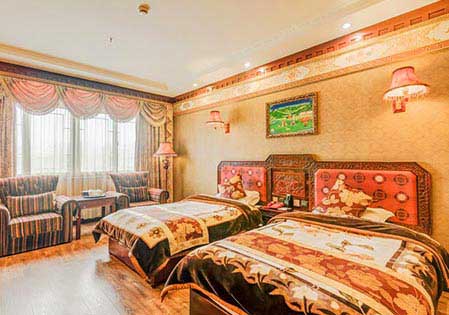
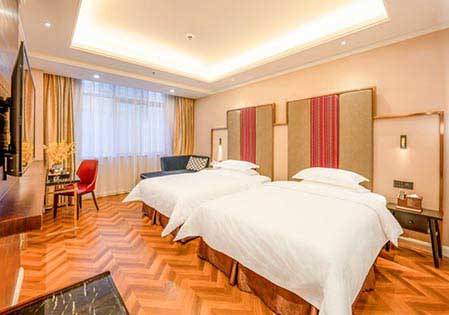
Have a good sleep everyday is very important during your China tour. In a private tour, you can decide on your own which hotel class you want – luxury 5 starcomfortable 4-star or economic 3-star.
All the hotels in each destination we selected are at good location, close to commercial street or tourist attractions. And, all the hotels we use have a business relationship for many years and they have windows, air-conditioners, hot water, showers, wifi… (except for basic accommodation condition when travel to Mount Everest) to ensure you luxury and comfortable sleep experience. The staff can speak English and they will provide you the high quality service. If you have any requirements, you can ask them to help.
What’s Included & What’s Not Included

•  The price is based on a group tour for 2 people sharing one standard double-bed room in comfort hotels.
•  Price varies depending on travel date, group size, hotel class, program in your itinerary and possible fluctuation of currency exchange rate.

What’s Included

Transportation
•  Regular licensed tourist vehicles (7–26 seats).
•  If there are fewer than 4 travelers for Lhasa city sightseeing, your guide will accompany you by taxi, and the taxi fare will be covered by the travel agency.
•  This is a join-in group tour, so changes of vehicles or guides may occur. Thank you for your understanding.
•  Due to Tibet’s limited tourism infrastructure, vehicles are generally older than those in mainland cities.
•  Most vehicles do not use air conditioning, as high altitude and temperature differences can cause mechanical issues and increase the risk of catching a cold.
•  There are driving speed limits in certain regions of Tibet (e.g., specific sections must not be completed in less than two hours). Your driver may stop at random points for rest or waiting—please be patient and enjoy the scenery.
•  When joining a group, pickups may involve waiting while collecting guests from multiple hotels. Please be punctual; if you voluntarily give up any day’s travel, the vehicle fee cannot be refunded.
•  Luggage policy: To ensure safety and comfort at high altitude, each traveler may bring one 26-inch suitcase and one small backpack. The guide will assist in storing excess luggage at your Lhasa hotel if necessary.

Accommodation
•  Standard twin rooms in basic hotels (double occupancy). Single-bed rooms (king-size) are not guaranteed; no extra bed or breakfast is provided for travelers not occupying a bed.
•  In case of odd-numbered travelers, the agency may arrange triple rooms, room-sharing, or charge a single supplement.
Fixed hotels are pre-arranged for group tours; specific hotel requests cannot be accepted.

Meals
•  Daily hotel breakfasts included.
•  Onecomplimentary local specialty meals (non-refundable if not used):
Lhasa Specialty Meal (Tibetan or Nepalese cuisine)
Other meals are self-arranged. If you are unaccustomed to Tibetan food, you may bring your own side dishes.
•  Complimentary meals may be arranged as lunch or dinner.

Guide Service
•  Chinese-speaking, English-speaking, or bilingual (Chinese-English) guides.
Guides are arranged according to the group composition. If both Chinese and English speakers are in one group, a bilingual guide will be provided.
•  In shared group tours, guide or vehicle changes may occur – your understanding is appreciated.

What’s Not Included

Single Room Supplement
•  Tour prices are based on twin-room occupancy (except for dormitory-style rooms).
•  If you require a single room, an additional single supplement fee will apply.

Hotel Changes or Hotel Cancellation Loss
•  Since hotels are prepaid in full, no refunds will be issued for any unused nights or itinerary changes after check-in.
•  Any damage to hotel property or extra charges incurred will be the traveler’s own responsibility.

Personal Expenses
•  All personal expenses are not included, such as:
Laundry, telephone, fax, or pay TV
Drinks, snacks, tobacco, or alcohol
Any other items or services of a personal nature

Unforeseen Circumstances
•  In case of force majeure or events beyond the control of the travel agency (such as natural disasters, war, strikes, epidemics, flight delays or cancellations, or insufficient group size),the agency reserves the right to cancel or adjust the itinerary.
•  Any extra costs incurred as a result will be borne by the traveler.

Transportation to and from Tibet
•  The tour price does not include flights or train tickets to and from Tibet. If you would like the travel agency to assist with booking, additional costs will apply.

Cancellation Policy

In the event that you need to cancel your trip, please ensure that you submit a written cancellation request. The calculation of cancellation fees will begin from the date we receive your written request.
The cancellation fees will be calculated as follows:

• If the cancellation is made between 45 and 30 days before the scheduled departure date, a fee of 10% of the full payment per person will apply.

• If the cancellation is made between 29 and 15 days before the scheduled departure date, a fee of 30% of the full payment per person will apply.

• If the cancellation is made between 14 and 7 days before the scheduled departure date, a fee of 50% of the full payment per person will apply.

• If the cancellation is made between 6 and 0 days before the scheduled departure date, a fee of 100% of the full payment per person will apply.

Important Trip Notes

All foreign travelers are required to obtain a Tibet Travel Permit to visit Tibet. The permit can only be applied for through a registered travel agency in Tibet (we are local based Tibet travel agency with office setting in Lhasa) and is required to purchase flight or train tickets to Tibet. The permit is necessary to enter Tibet and visit certain areas within the region, including Lhasa and Mount Everest Base Camp. Travelers should plan ahead and allow sufficient time for the permit application process, as it can take one to two weeks to obtain the necessary permits.
All foreign travelers are advised to make their bookings at least one week in advance and send the necessary documents to us for obtaining the permits. However, if you plan to visit Mount Kailash, it is recommended to book at least two weeks in advance, as it may take longer to obtain the necessary permits.

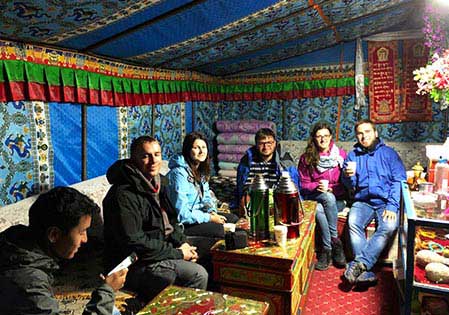
Typically, small group tours in Tibet will have 1-16 travelers, and you will have the opportunity to meet and travel with tourists from different parts of the world. This can be a great chance to make new friends and connect with people from different cultures and backgrounds.

Yes, if you are traveling with a group of friends or with your family, you can customize your own group tour. Please contact your professional travel consultant to discuss and arrange a customized group tour that meets your needs and preferences.

 
•  “B” stands for breakfast. You will have it at your hotel in the morning.
 
•  “L” stands for lunch. The restaurants we will arrange for you are all designated tourist restaurants approved by local tourist administration bureau. All are in good sanitary conditions. Lunches are usually included if you have a full day tour in one destination. Your guide will assist you with ordering the dishes. If you will travel from one city to another, lunches are excluded and you can ask the guide for some suggestions about where and what to eat.
 
•  “D” means dinner. All dinners are excluded in the itinerary. You have the chance to taste some authentic Chinese food and local snacks.
 
•  If you have special dietary requirements (vegetarian, halal, kosher, Indian, or gluten-free), please let us know before your booking. We will try our best to take care of you.

Book Your Expert-Led Tibet Discovery

Ready to see Tibet differently? Join our specialized local team for an authentic, high-altitude experience designed to go far beyond the typical tourist route. With vetted logistics, expert local guides, and a passion for deep cultural immersion, we guarantee a journey that is as safe as it is transformative. Secure your spot today—your path to the heart of Tibet starts here.

Expert-Guided Cultural Deep-Dive

Not just tours, but true immersion. Unlike generic sightseeing, our routes are crafted by local scholars and Himalayan experts. You aren’t just visiting landscapes; you are entering stories, gaining insights into Tibetan history, Buddhism, and plateau life that remain invisible to the standard traveler.

Authentic & Transparent Journey

Zero commercial pressure. We believe your pilgrimage belongs to you alone. We strictly adhere to a 100% No Shopping Stops policy, ensuring every moment of your precious time is spent exploring sacred heritage and breathtaking nature—never in a commercial trap.

Perfectly Paced Exploration

Slow travel in high-altitude comfort. We prioritize both your safety and your experience. Our itineraries are masterfully paced for high-altitude acclimatization, blending iconic ‘big wow’ landmarks with secret, hidden gems, allowing you to breathe in the plateau’s serenity without ever feeling rushed.